

The Jongomero Camp
Ruaha National Park, Iringa Region, Tanzania
- 28 guests
- 11 bedrooms
- 12+ beds
- 12 bathrooms
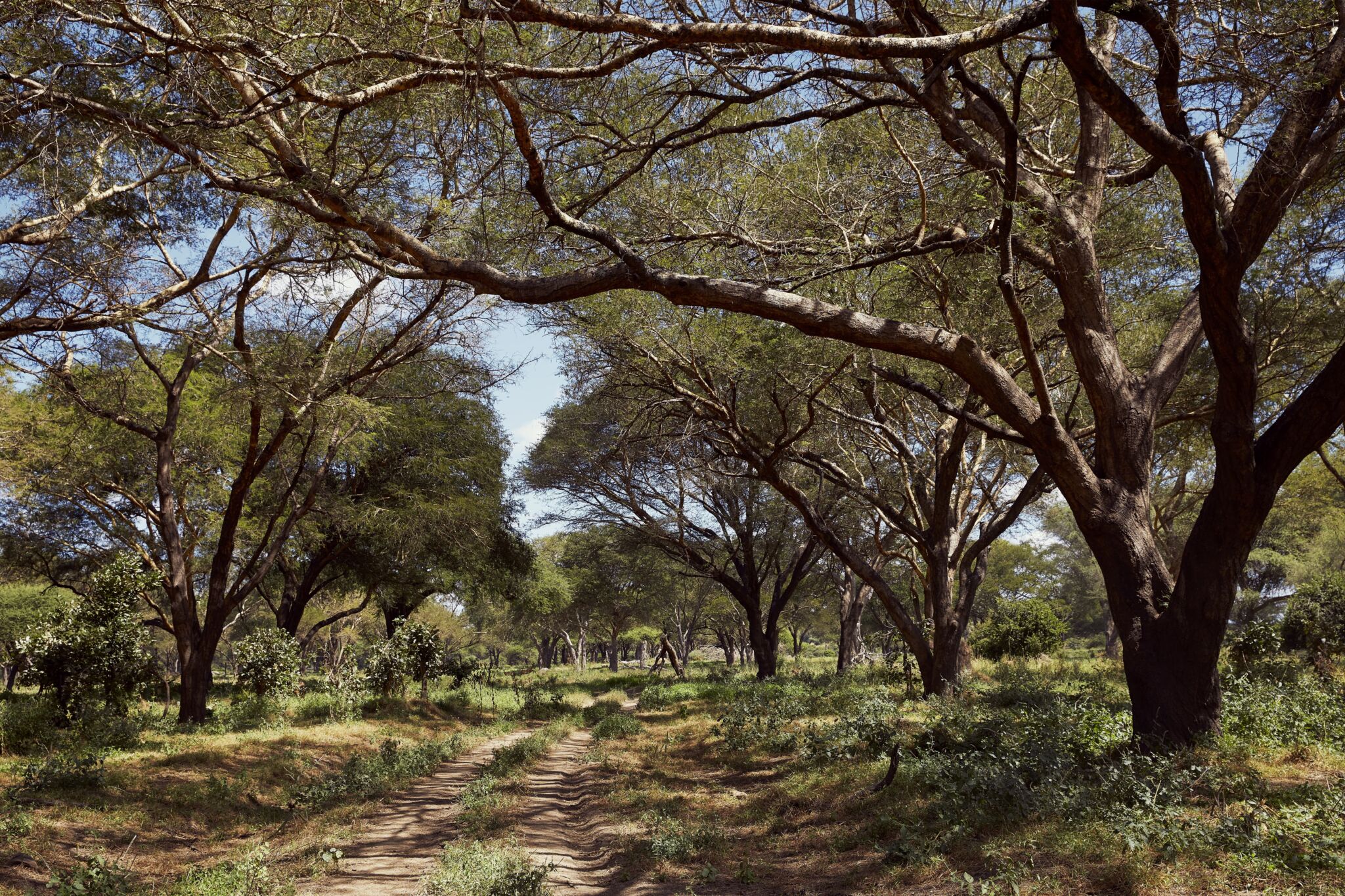
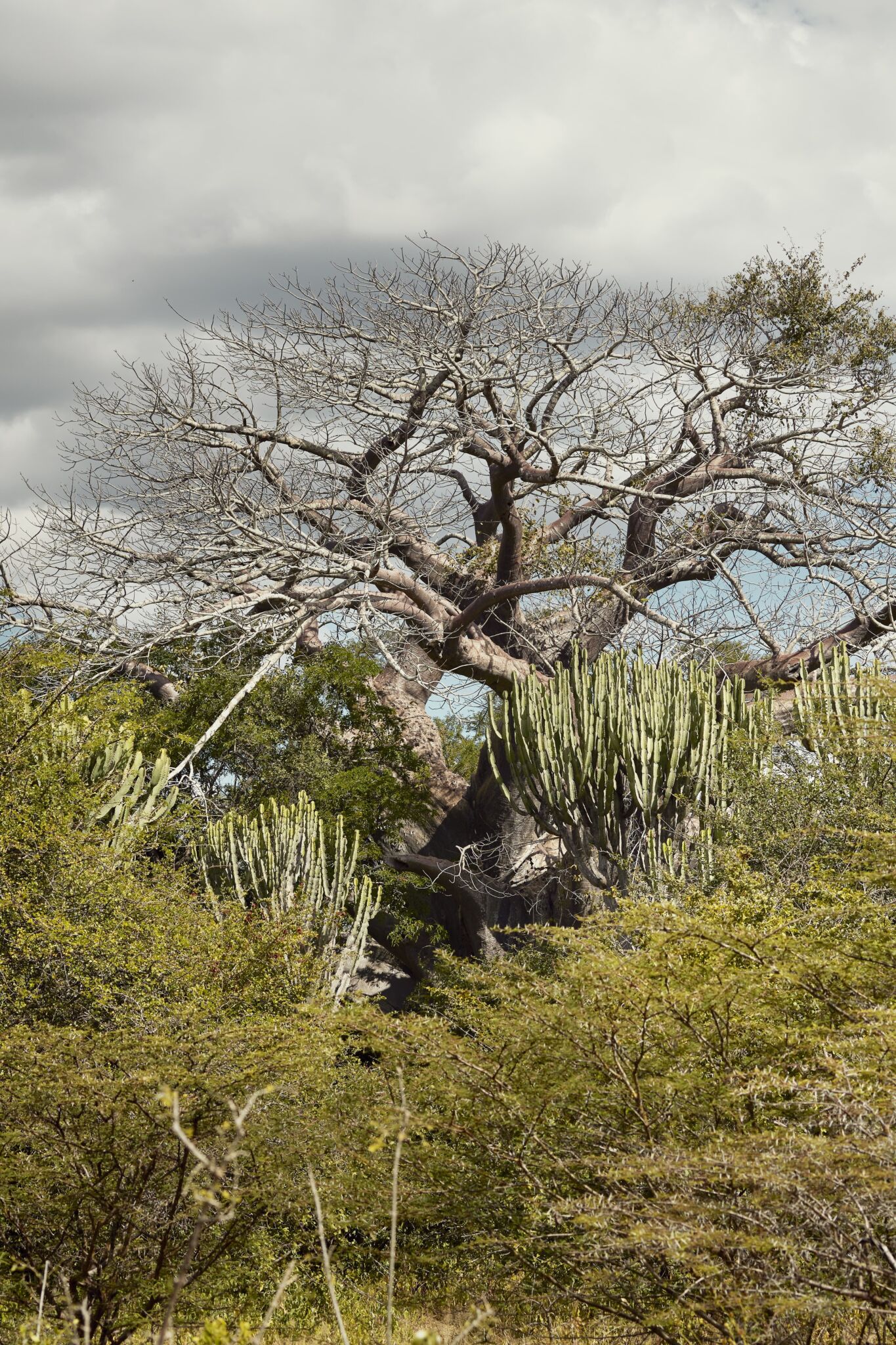
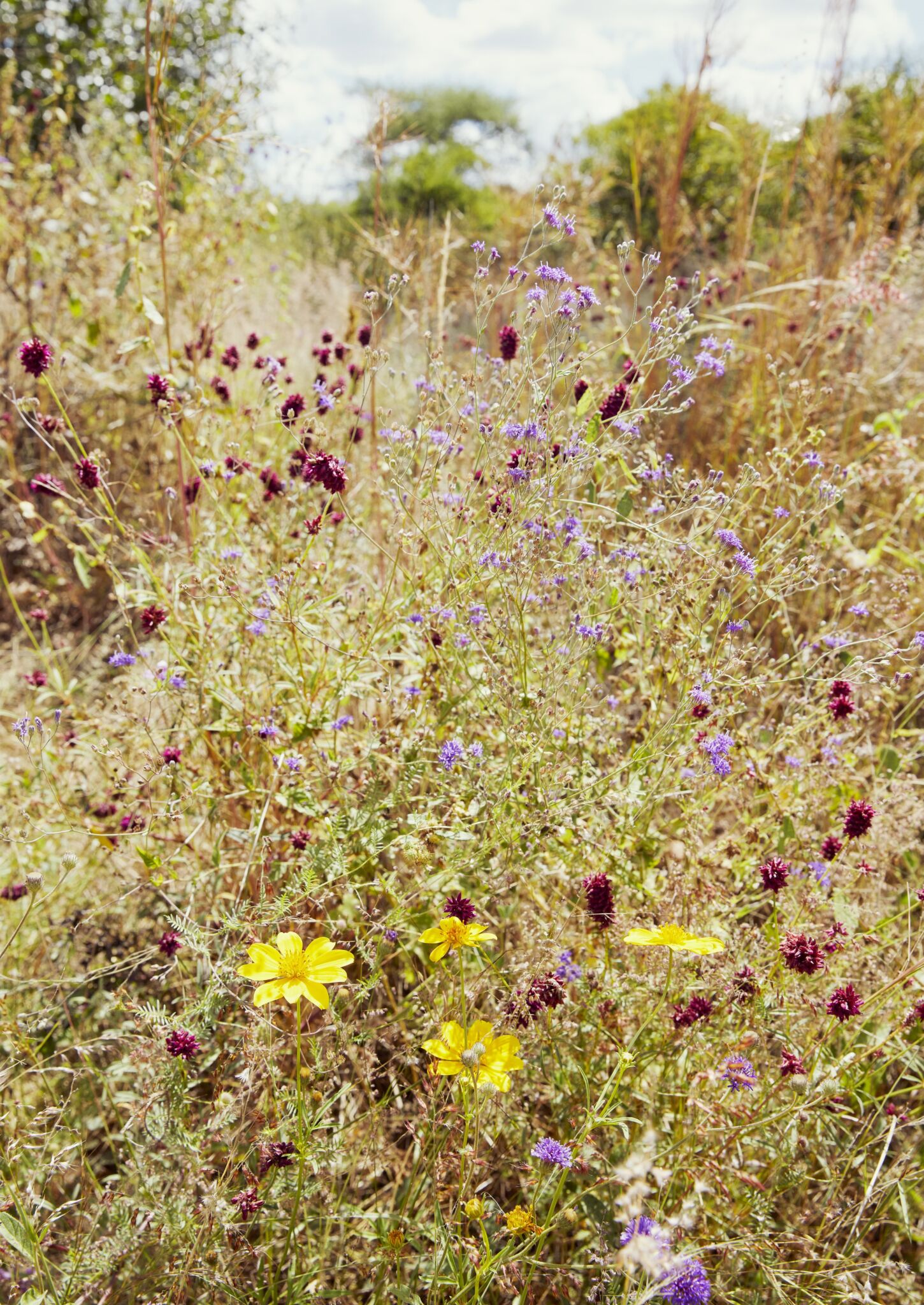
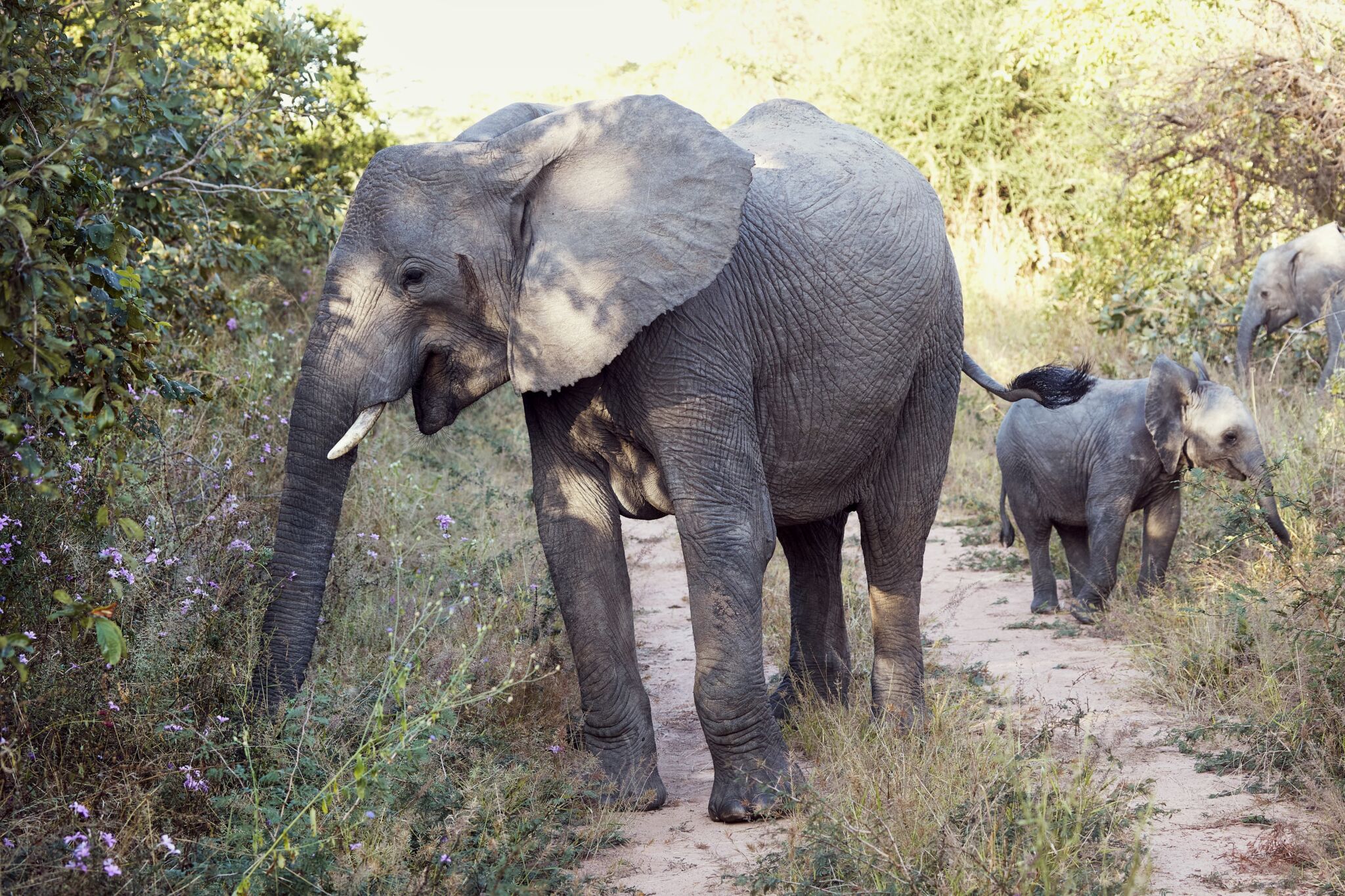
Ruaha is the second-largest national park in Tanzania and the least visited of the great southern reserves. The country it covers, twenty thousand square kilometres of miombo woodland, sand river, baobab plain and granite outcrop, holds ten per cent of Africa's lion population and the largest elephant population of any park in East Africa. There are no fences for hundreds of miles in any direction. Tourist traffic, by Serengeti standards, is barely a rumour. To reach The Jongomero Camp from the nearest airstrip is itself a journey of forty minutes by light aircraft, banking low over the Great Ruaha and dropping into a bush strip cut from the savannah.
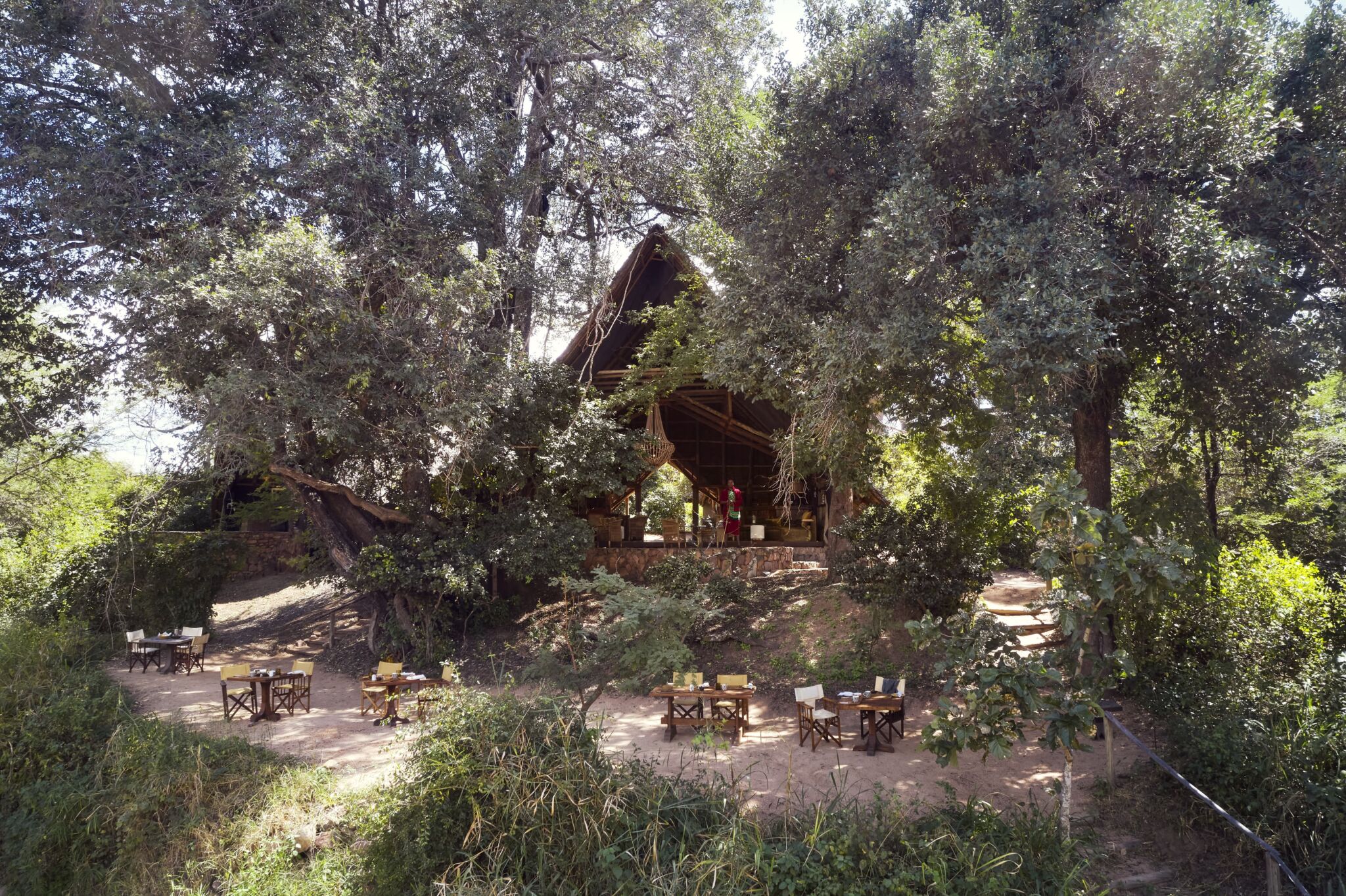
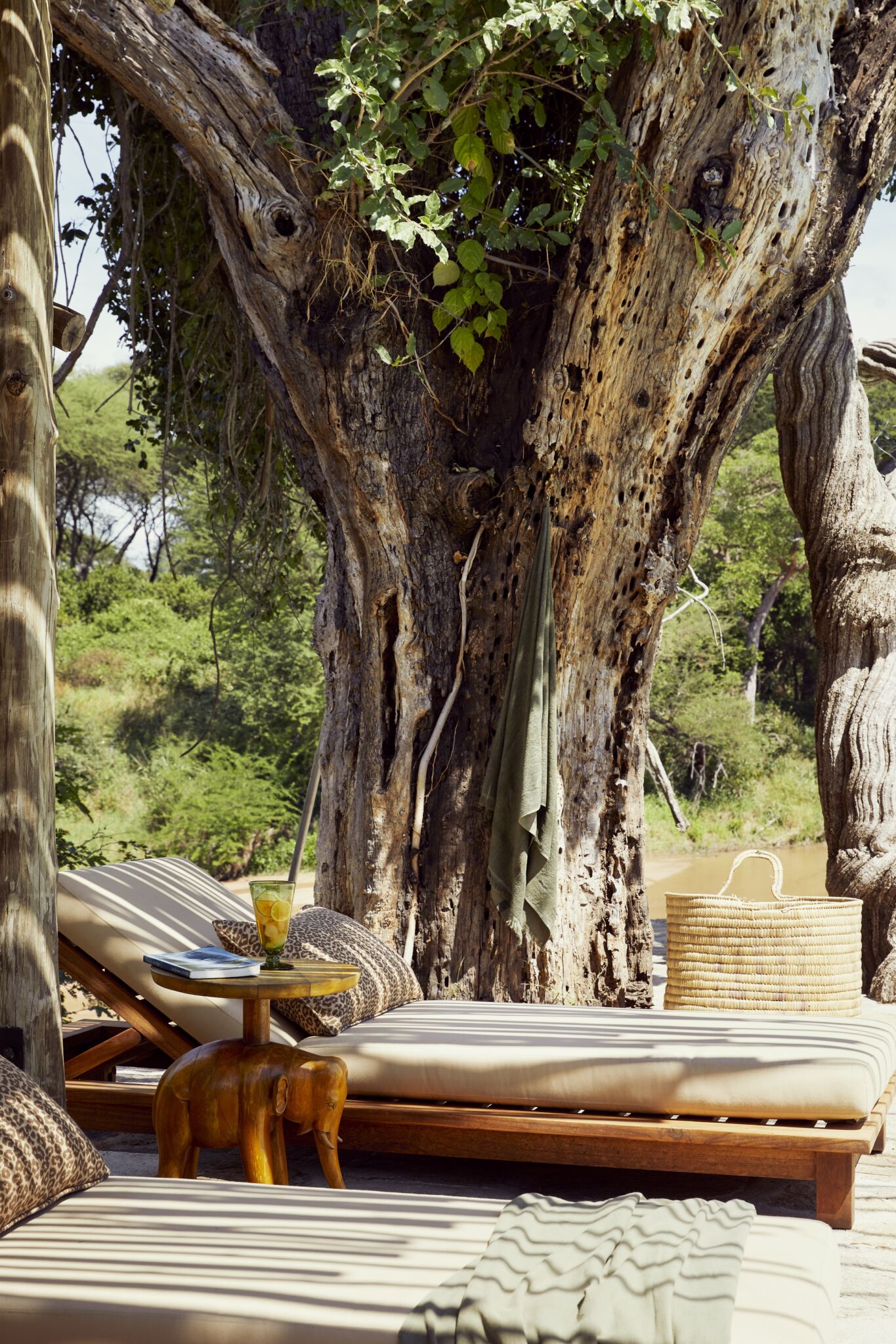
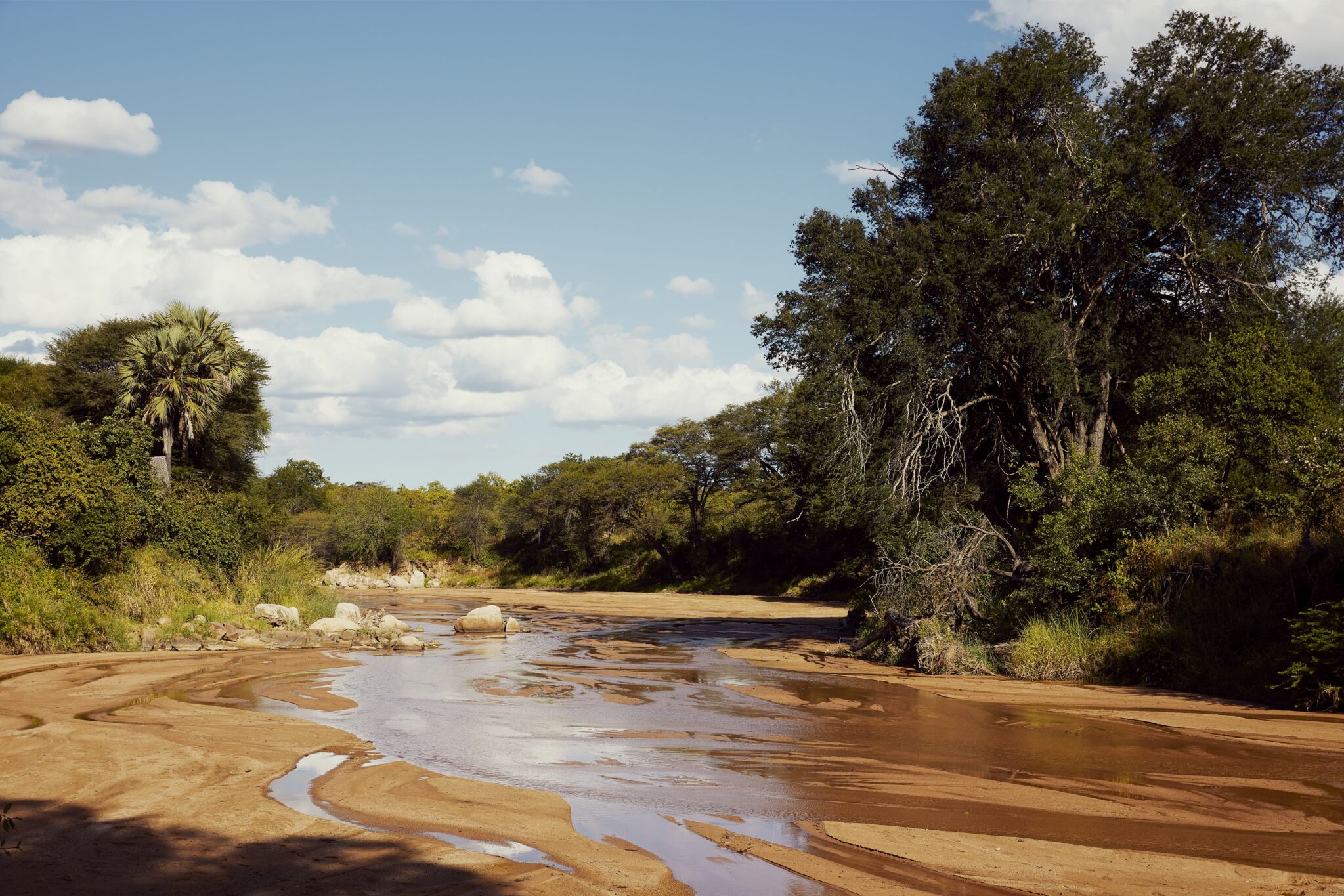
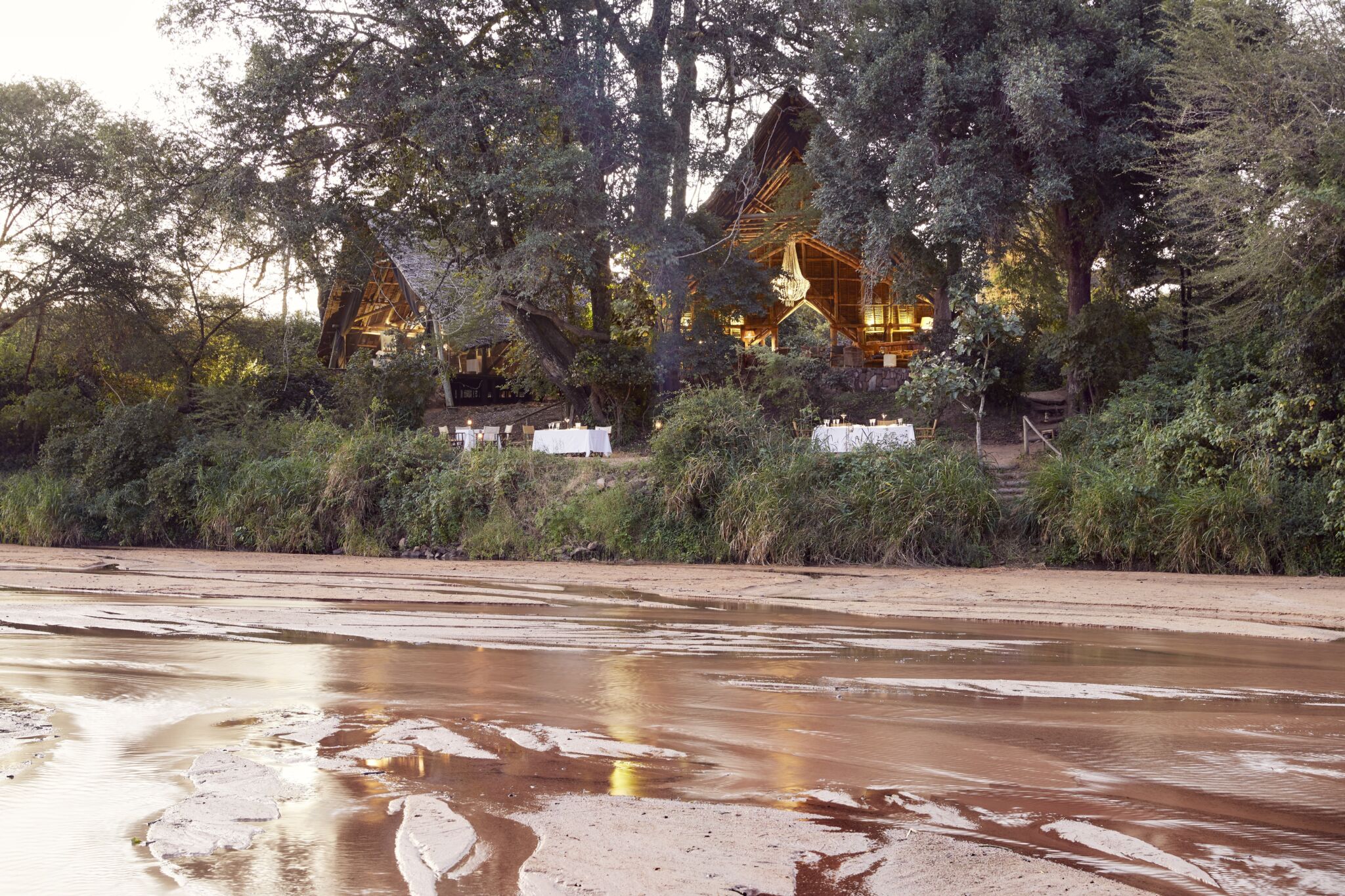
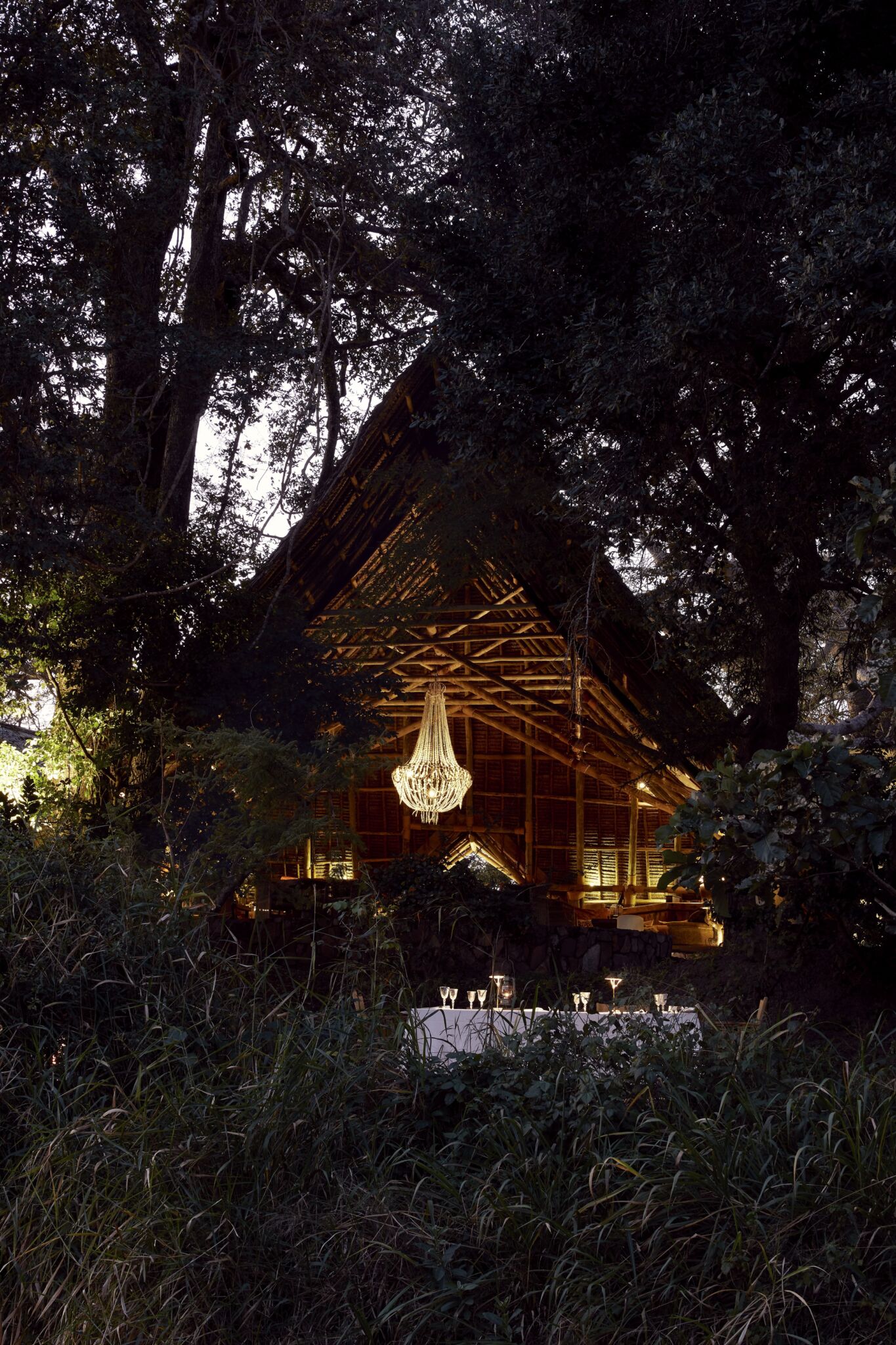
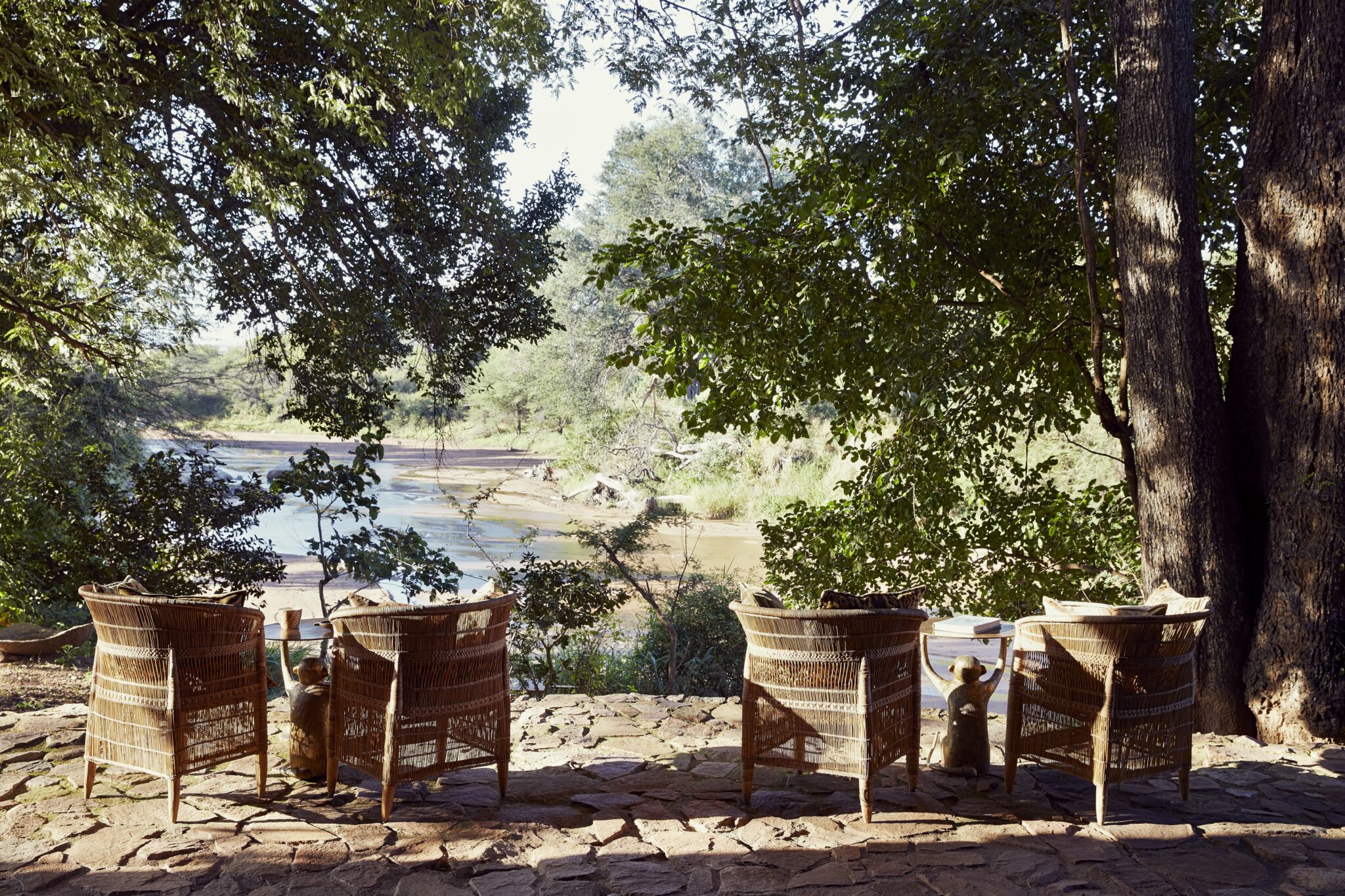
The camp itself sits on the banks of the Jongomero River, a seasonal watercourse that flows broadly between December and June, with its peak between March and May, and gives way through the dry season to a sand bed dotted with pools where the elephants come to drink. Ten luxury tented suites are arranged along the riverbank under century-old ebony and tamarind trees, with the Bush Manor, a two-bedroom private villa, set discreetly apart at the western end of the line. Behind the camp, miles of unbroken bush. Beyond it, the wider park stretches almost without limit.
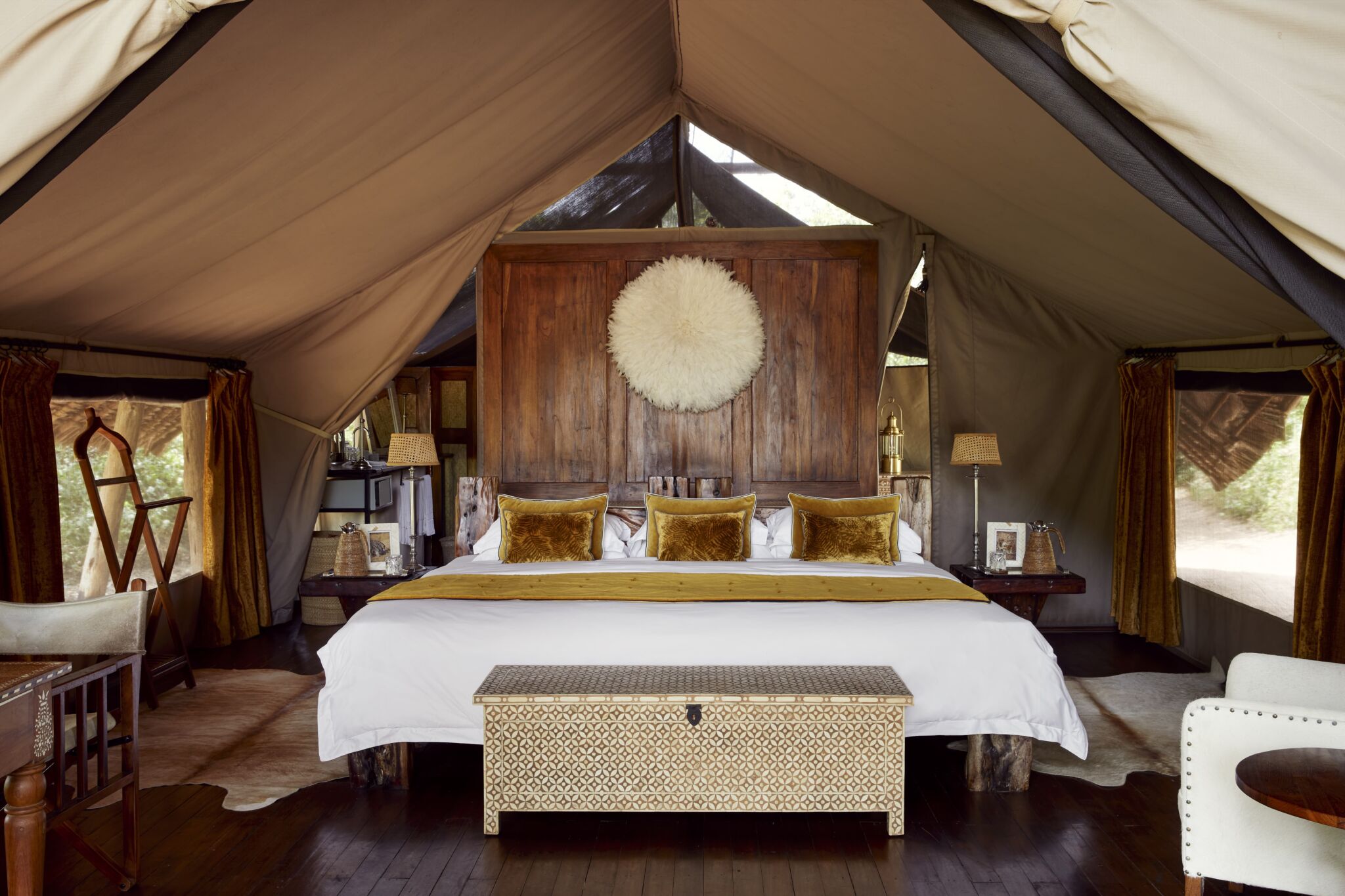
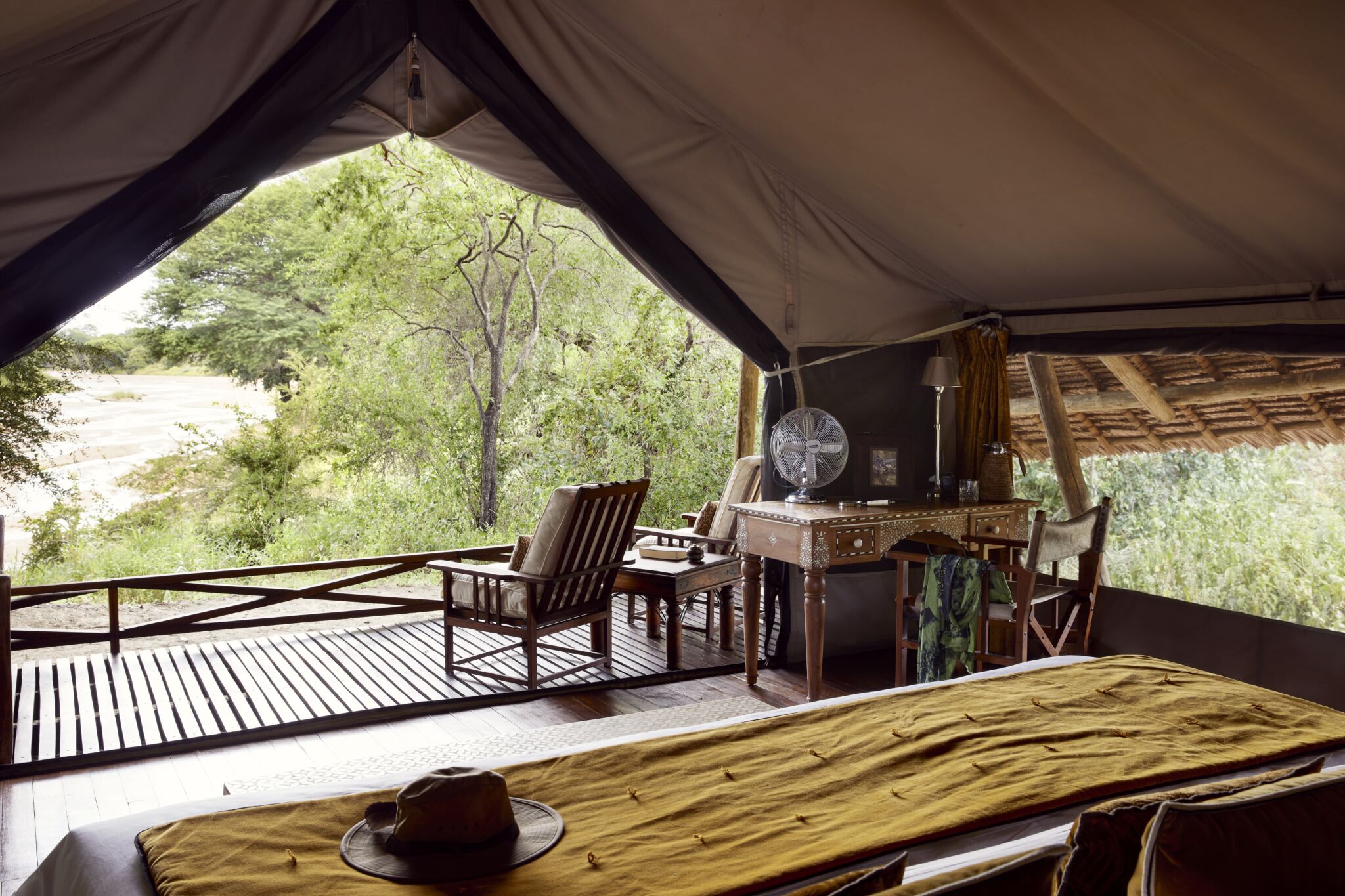
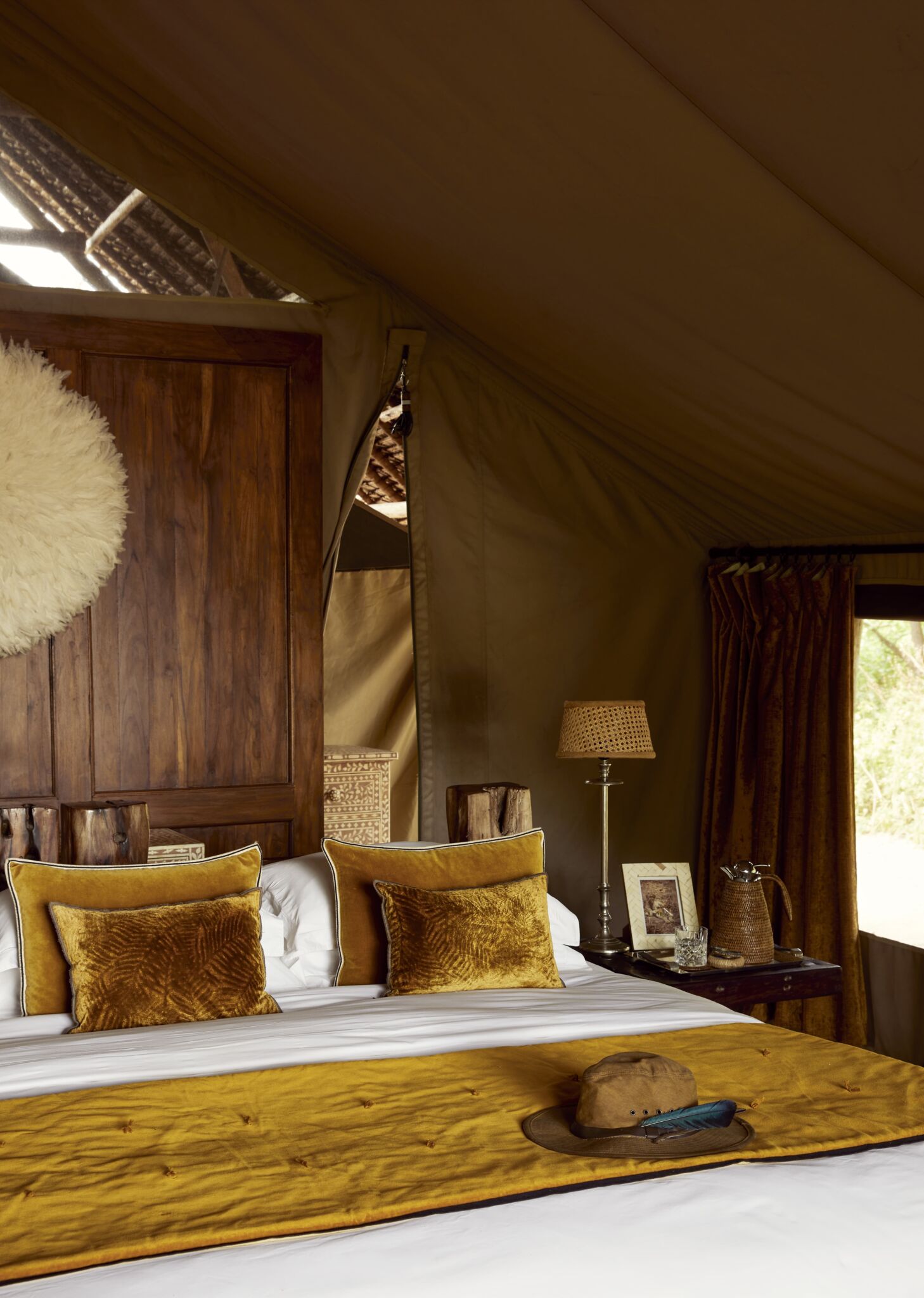
The tents themselves are unfussy and elegantly equipped: eighty-nine square metres apiece, fitted with hardwood floors, organic satin cotton linens, en suite bathrooms with large walk-in showers and double washbasins, hairdryers, electronic safes, ceiling fans, and the two-way radios that are standard practice in serious bush camps. Power throughout is solar; everything from the ice in your drink to the hot water in your shower is delivered by the sun. The construction itself, in stone, wood, palm thatch and canvas, was carried out using only local materials, and the camp leaves no permanent footprint when it closes between mid-March and the end of May for the long rains.
Guests of The Grand Keys arrive to find a bottle of South African sparkling waiting in the tent, with a hand-written note from the specialist who has held their booking from first enquiry. Where the camp has availability, a complimentary lift into a higher tent (or, for those staying long enough, into the Bush Manor) is applied at check-in. A full-board credit of one hundred and fifty US dollars per stay is set against the camp's optional activities (the fly camping expedition, the hot-air balloon flight at dawn, the thermal-spa transfer) at the guest's discretion.
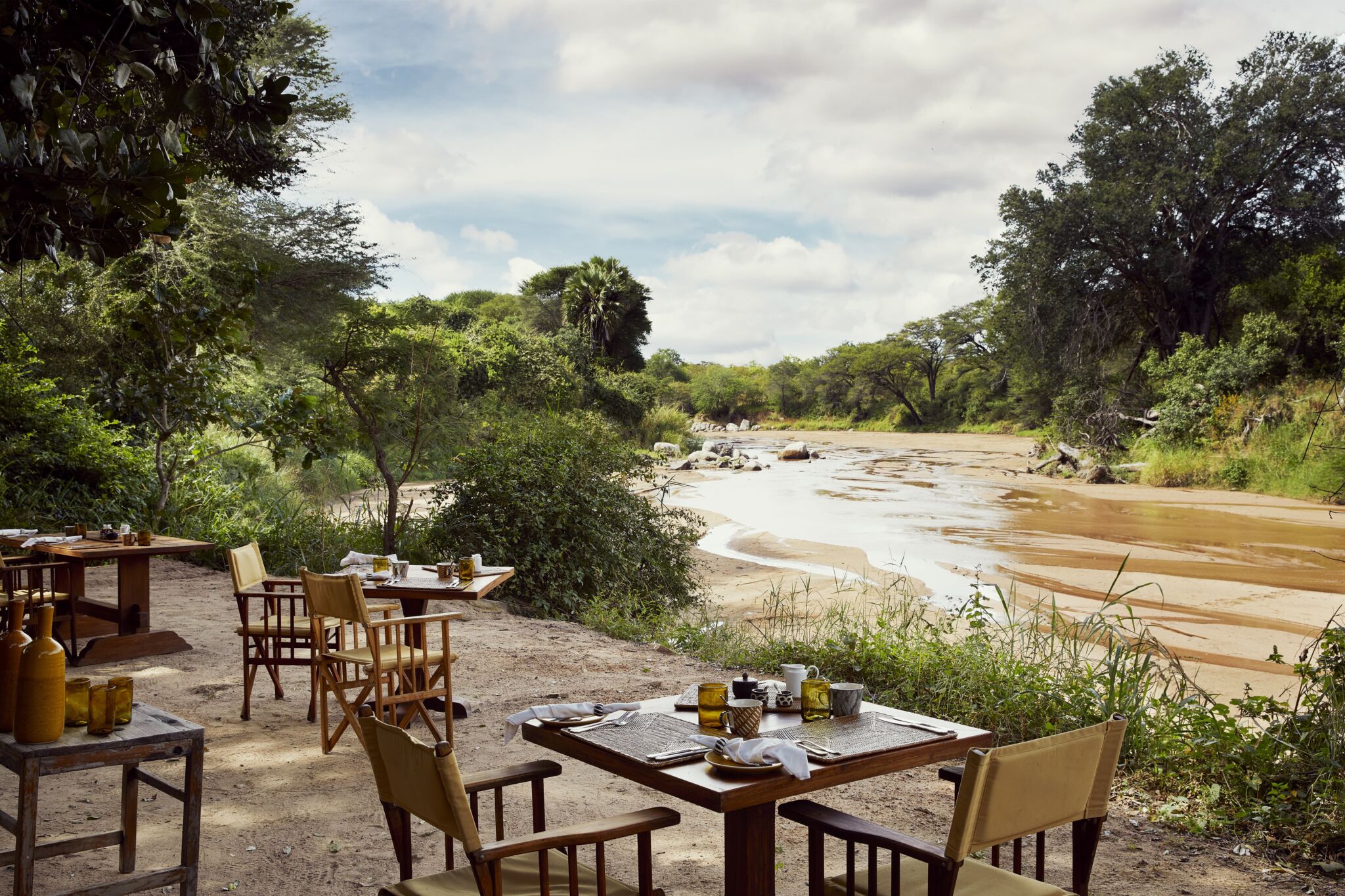
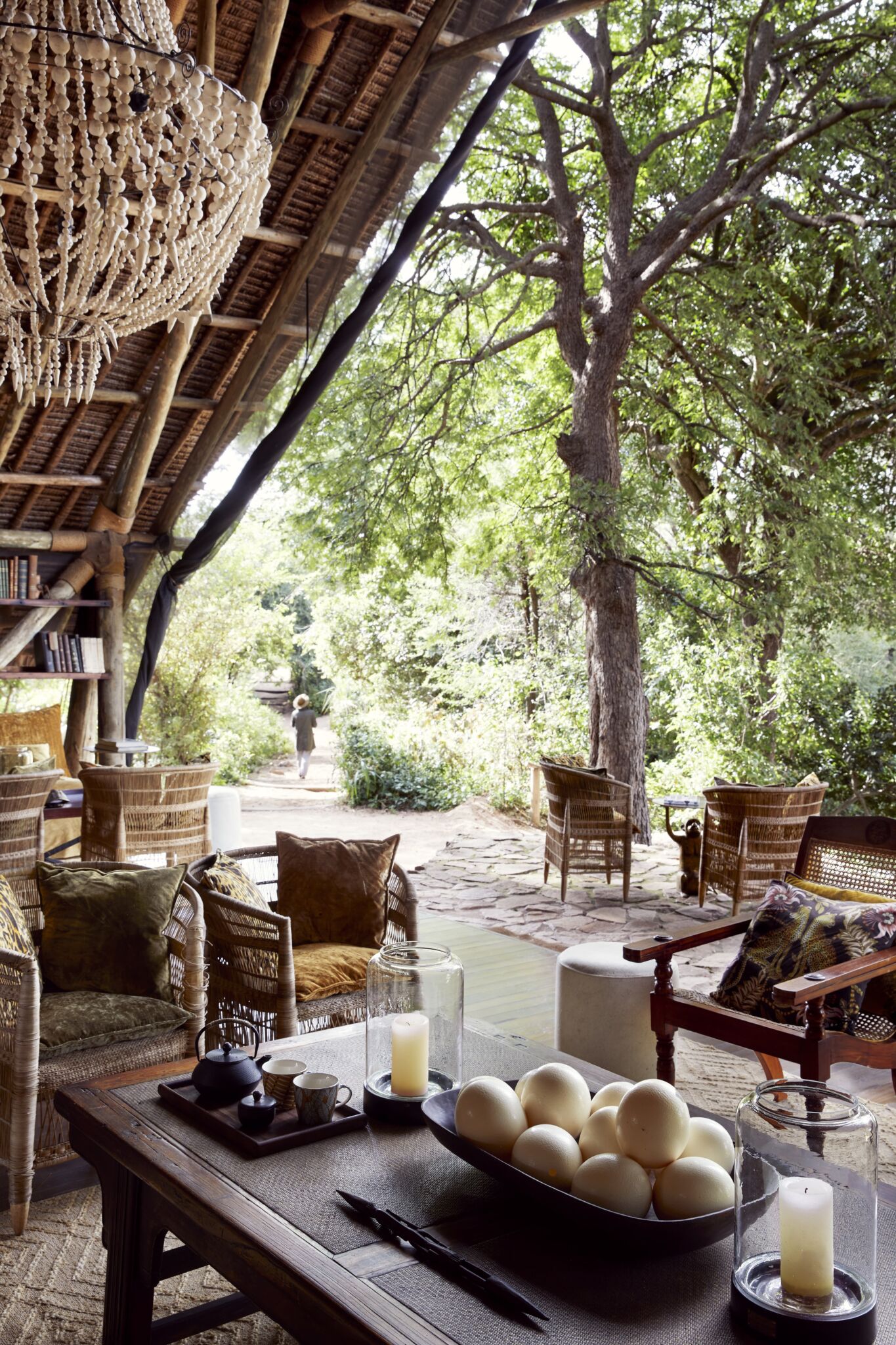
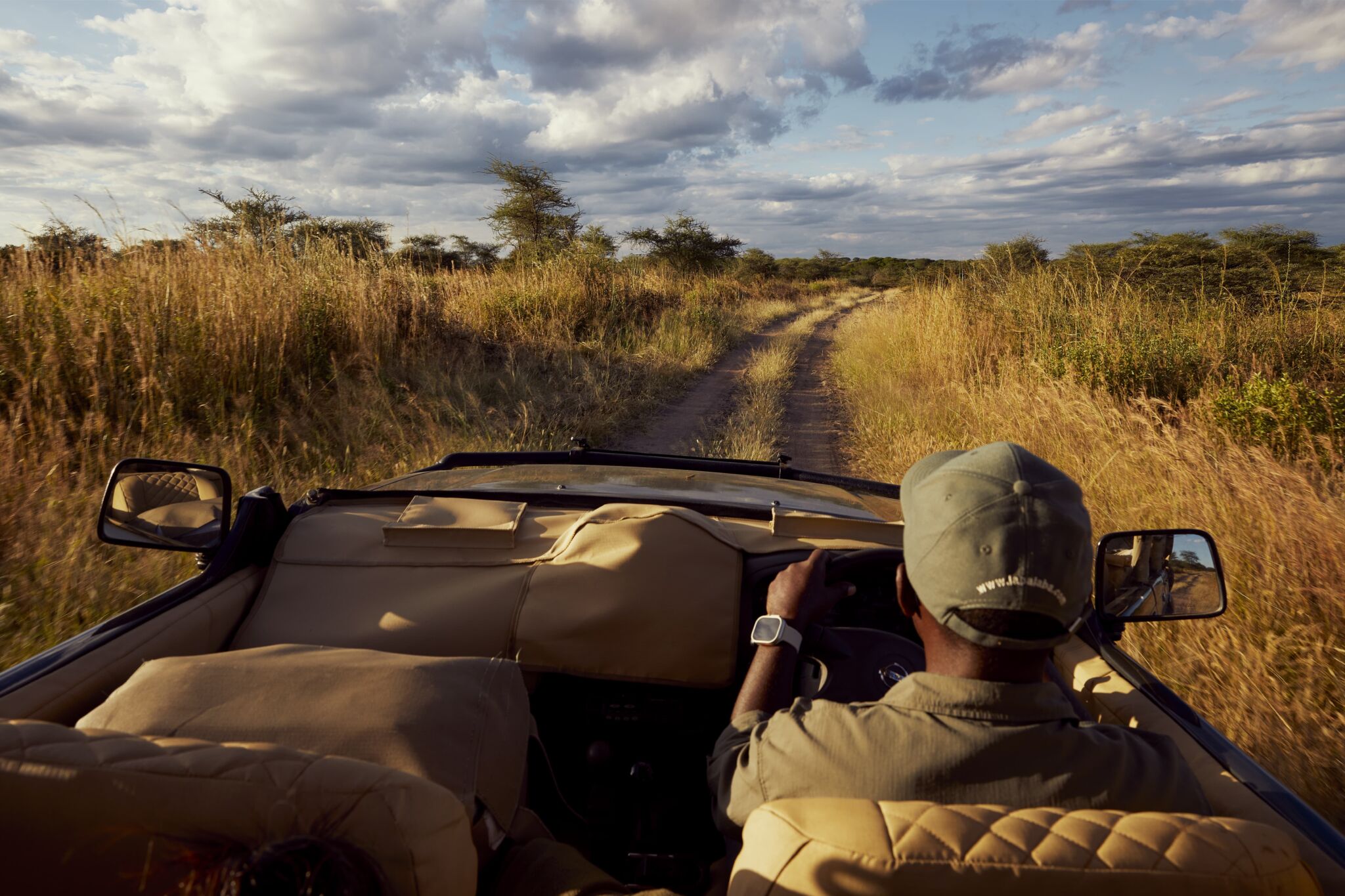
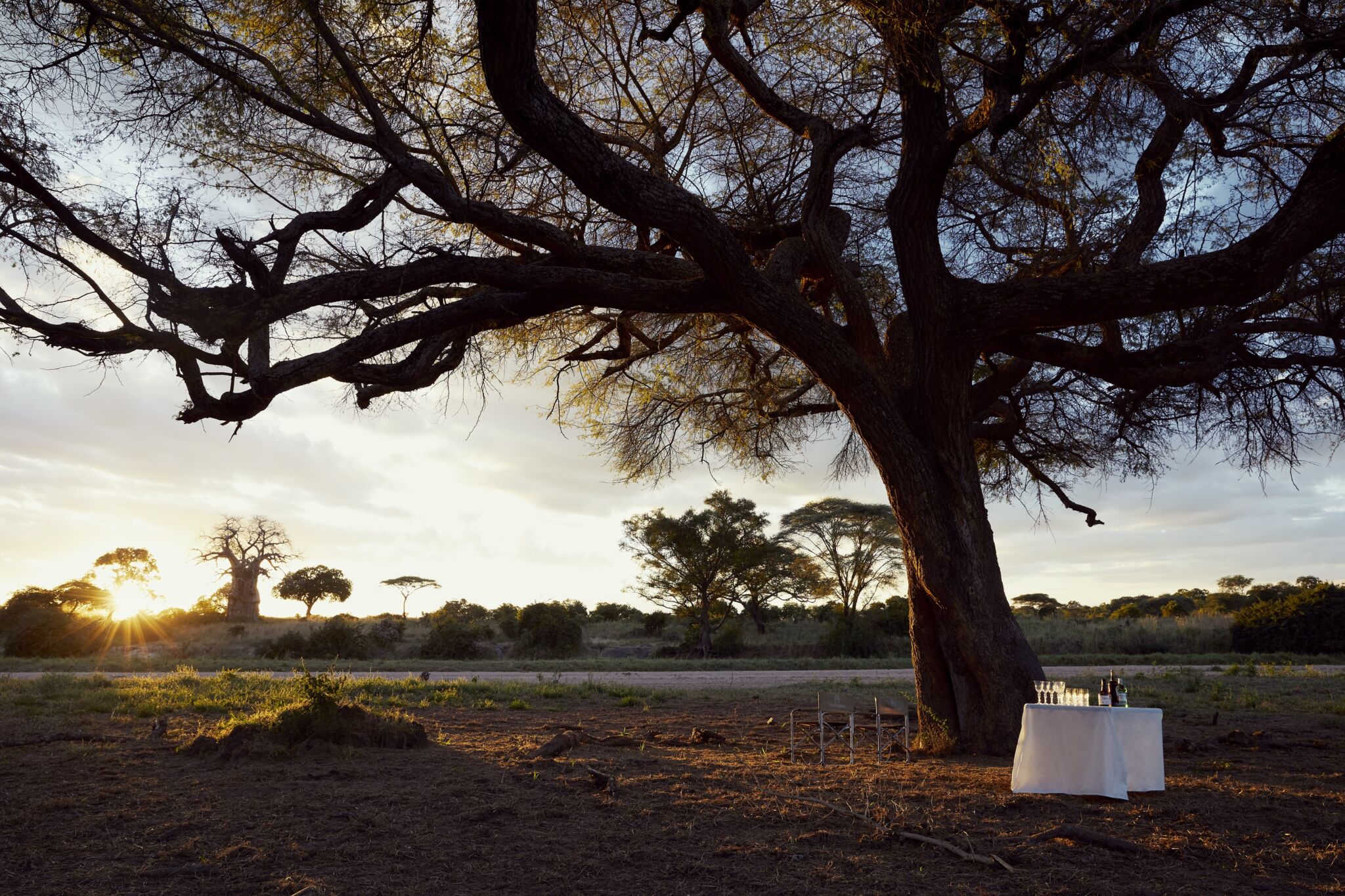
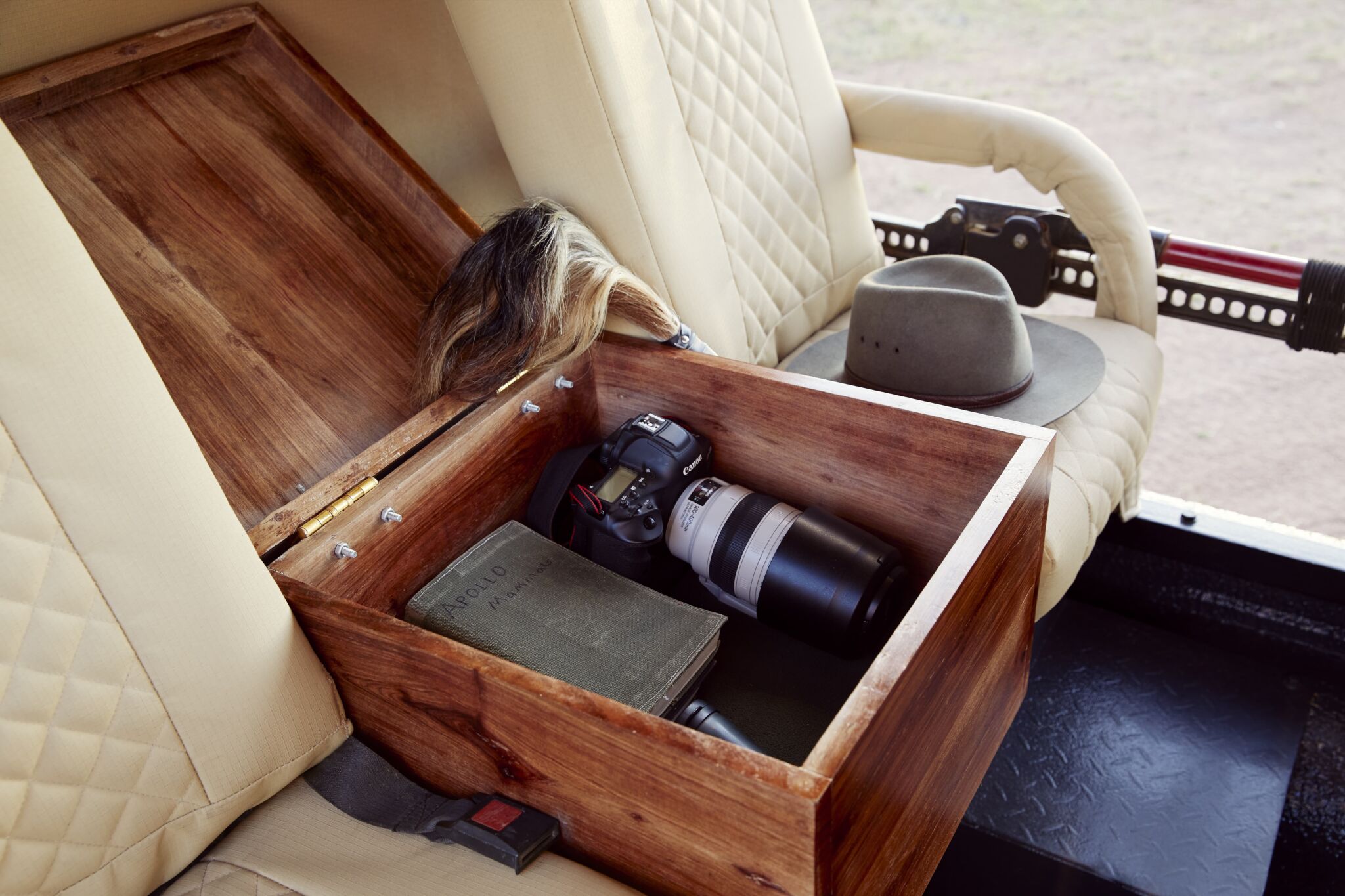
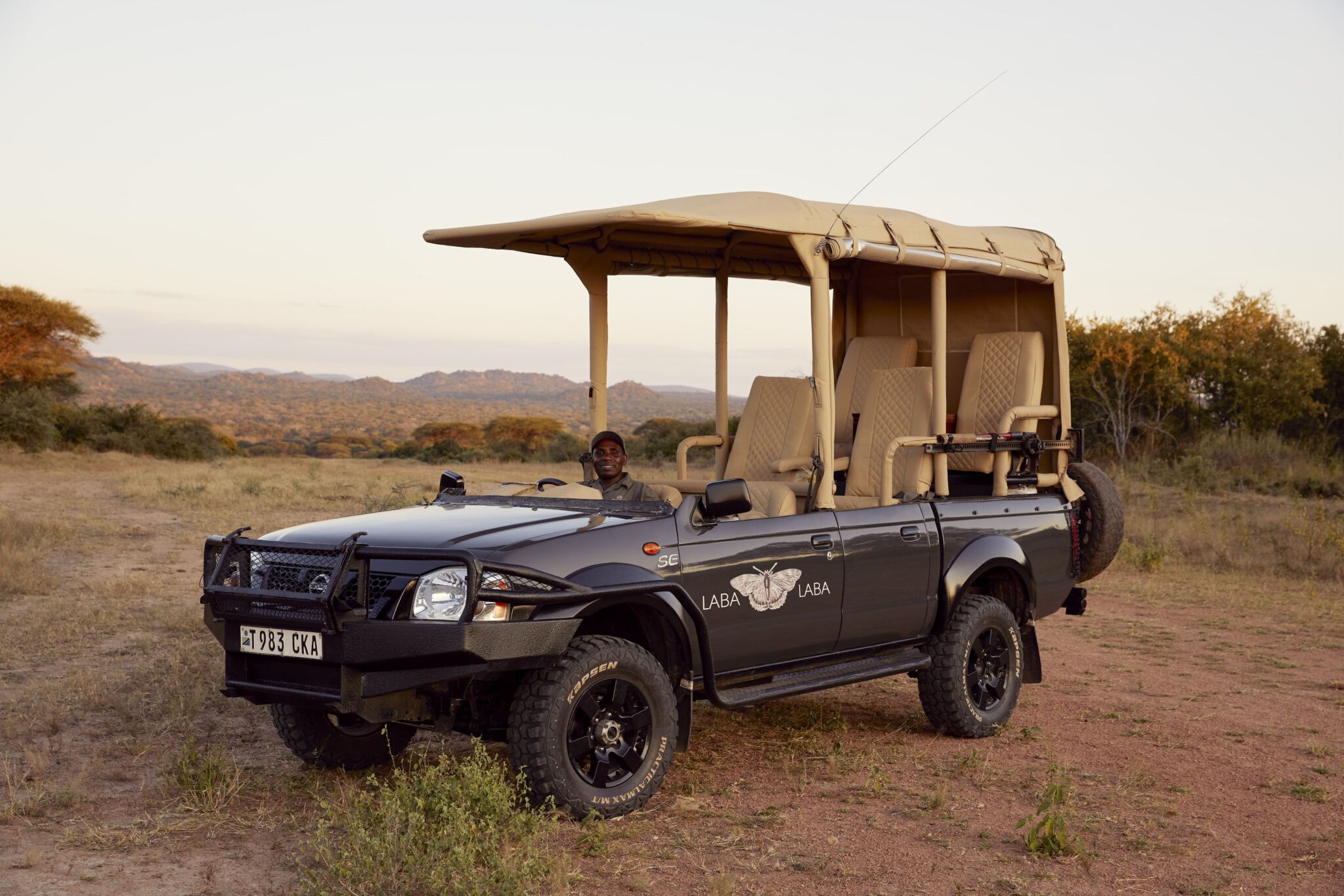
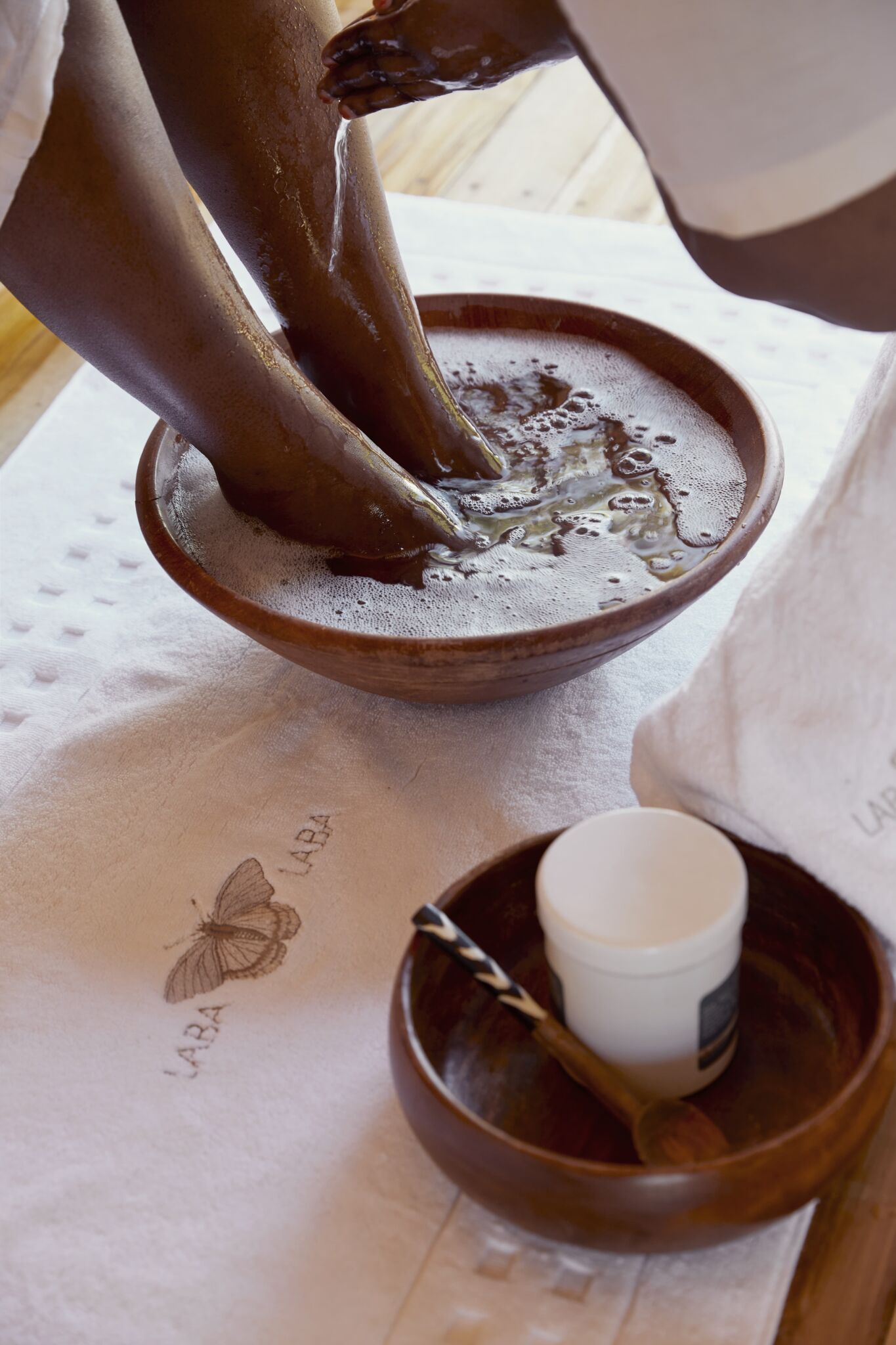
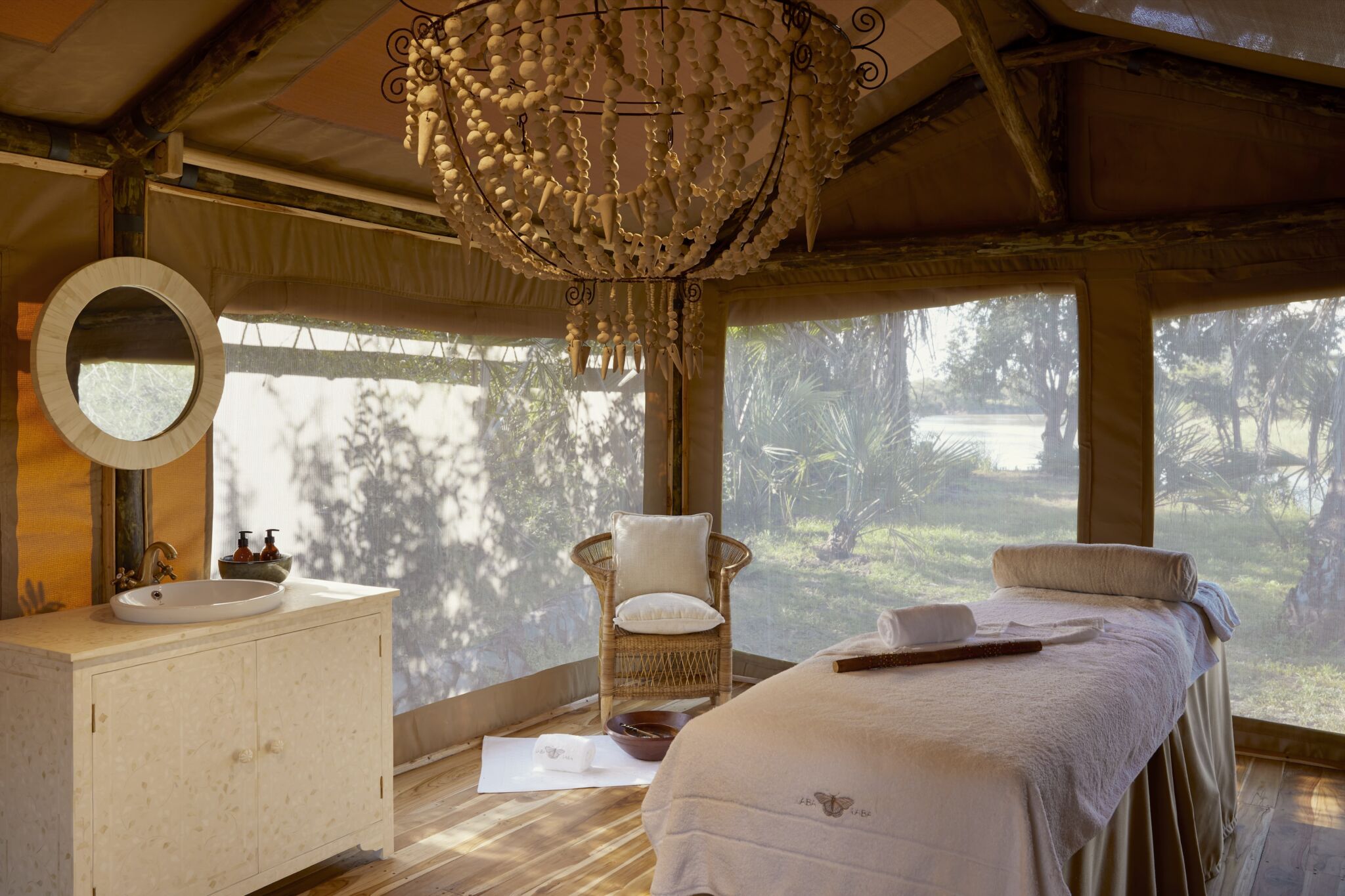
Days here follow the rhythm of the bush rather than the clock. A pre-dawn coffee in the camp lounge gives way to a morning game drive, taken in open Land Cruisers fitted with cooler boxes, binoculars, fleece blankets and lined rain ponchos for the chillier mornings. Lunch is taken back at camp, in the shade of century-old trees on the riverbank, or, more often, as a private bush picnic somewhere out in the park. The afternoon is for resting, for the river-view swimming pool, the Technogym pavilion, or a treatment at the camp's bush thermal spa, where guests bathe in pools of volcanic hot-spring water under acacia trees. The evening game drive returns at dusk, with a sundowner cocktail mixed on the bonnet of the vehicle as the light goes. Dinner is set either in the open-sided dining room or al fresco by the river, with the kitchen running a Laba Laba Signature menu of contemporary East African cooking drawn from estate produce and local fishermen on the Great Ruaha downstream.
Throughout the stay, your assigned Grand Keys specialist remains on call, reachable by satellite WhatsApp and telephone. The camp itself has no children under five, no signage, no Wi-Fi outside the tents and main areas, and no commercial intrusion of any kind beyond a single, unhurried programme of game drives and walks. Full board (including premium spirits and wines, with the single exception of champagne) is built into the rate, alongside laundry, all government conservation fees, and return airstrip transfers. The published rate carries no booking fee and no payment markup.
Amenities
Living Spaces
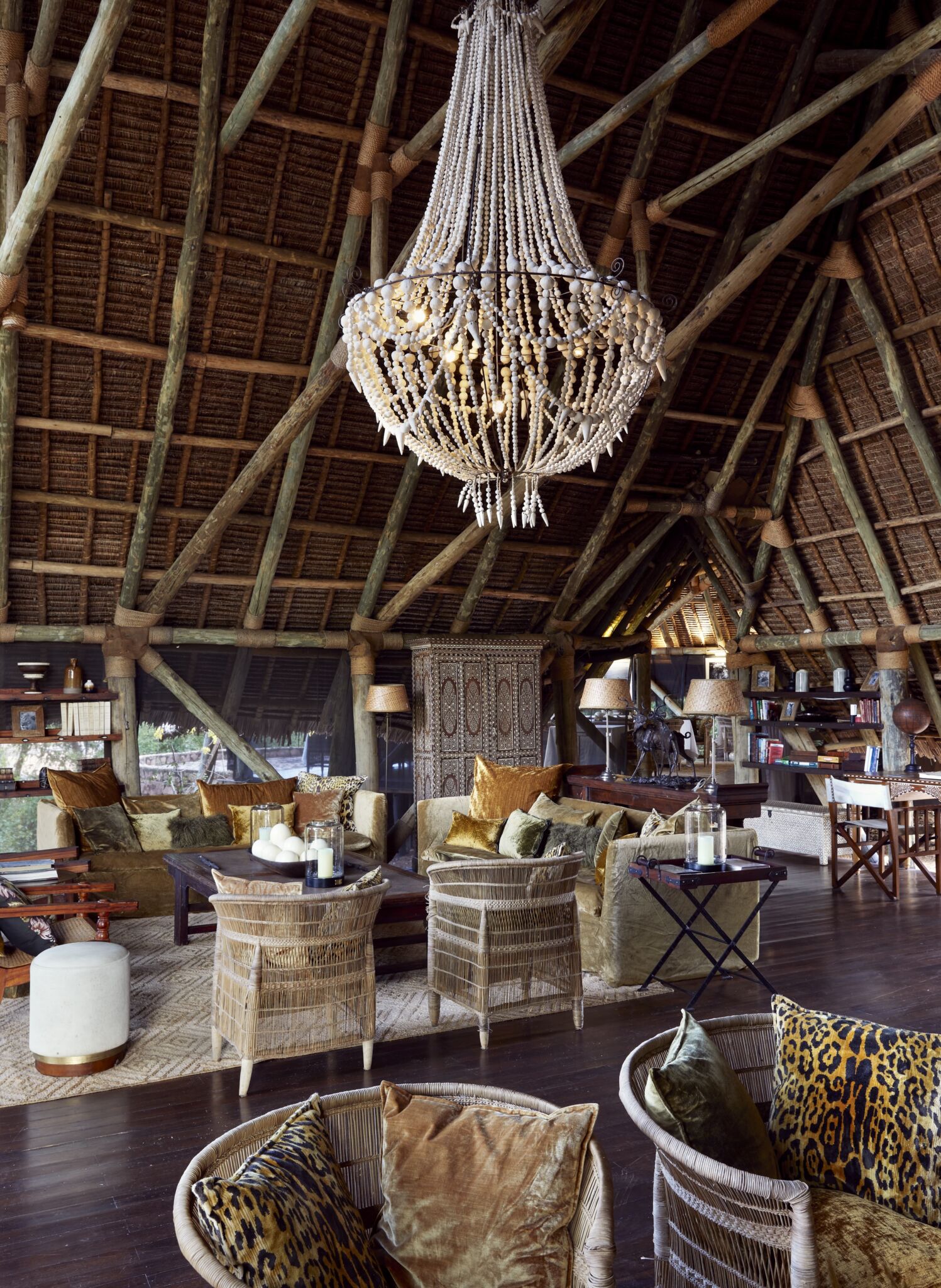
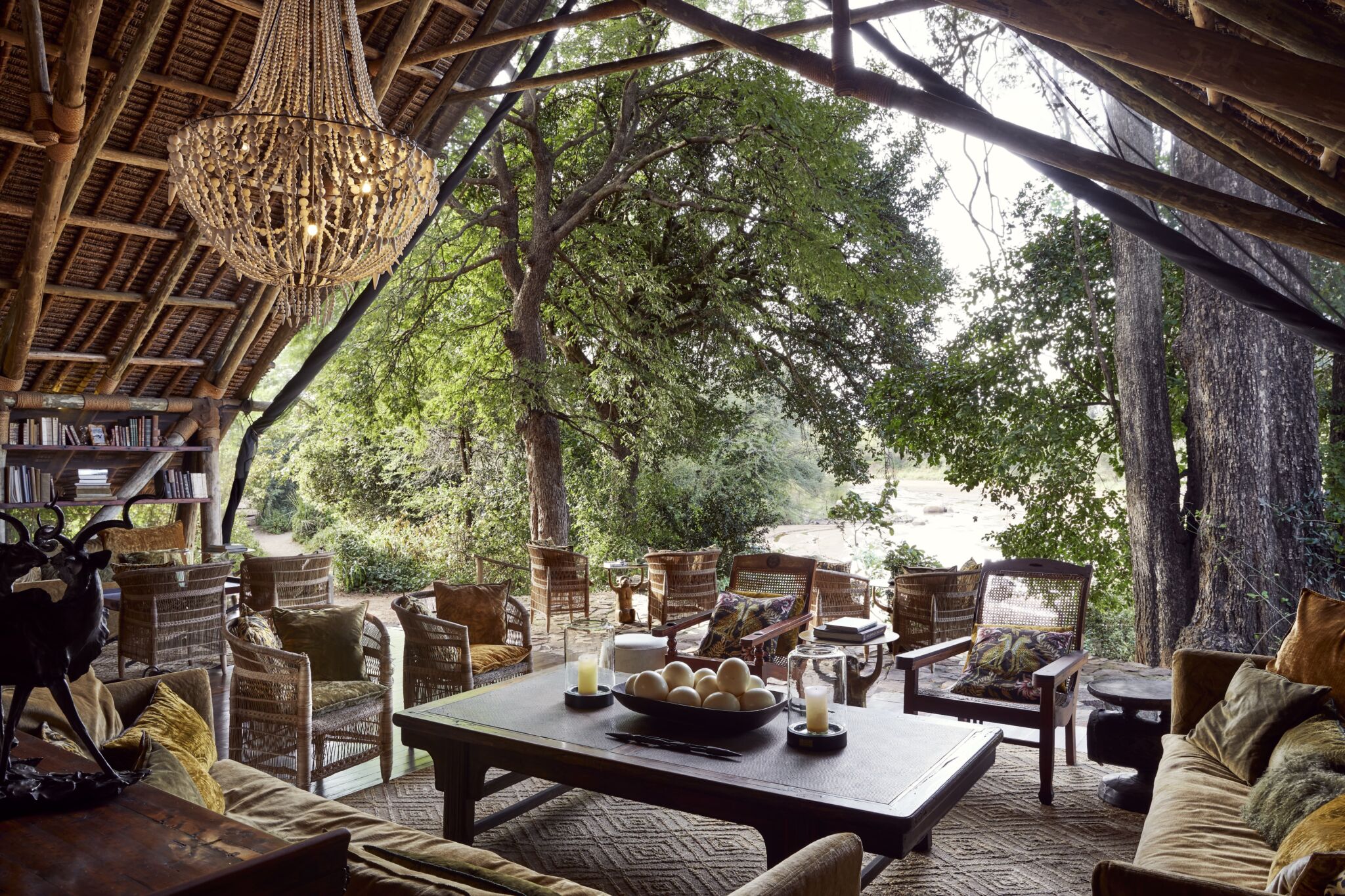
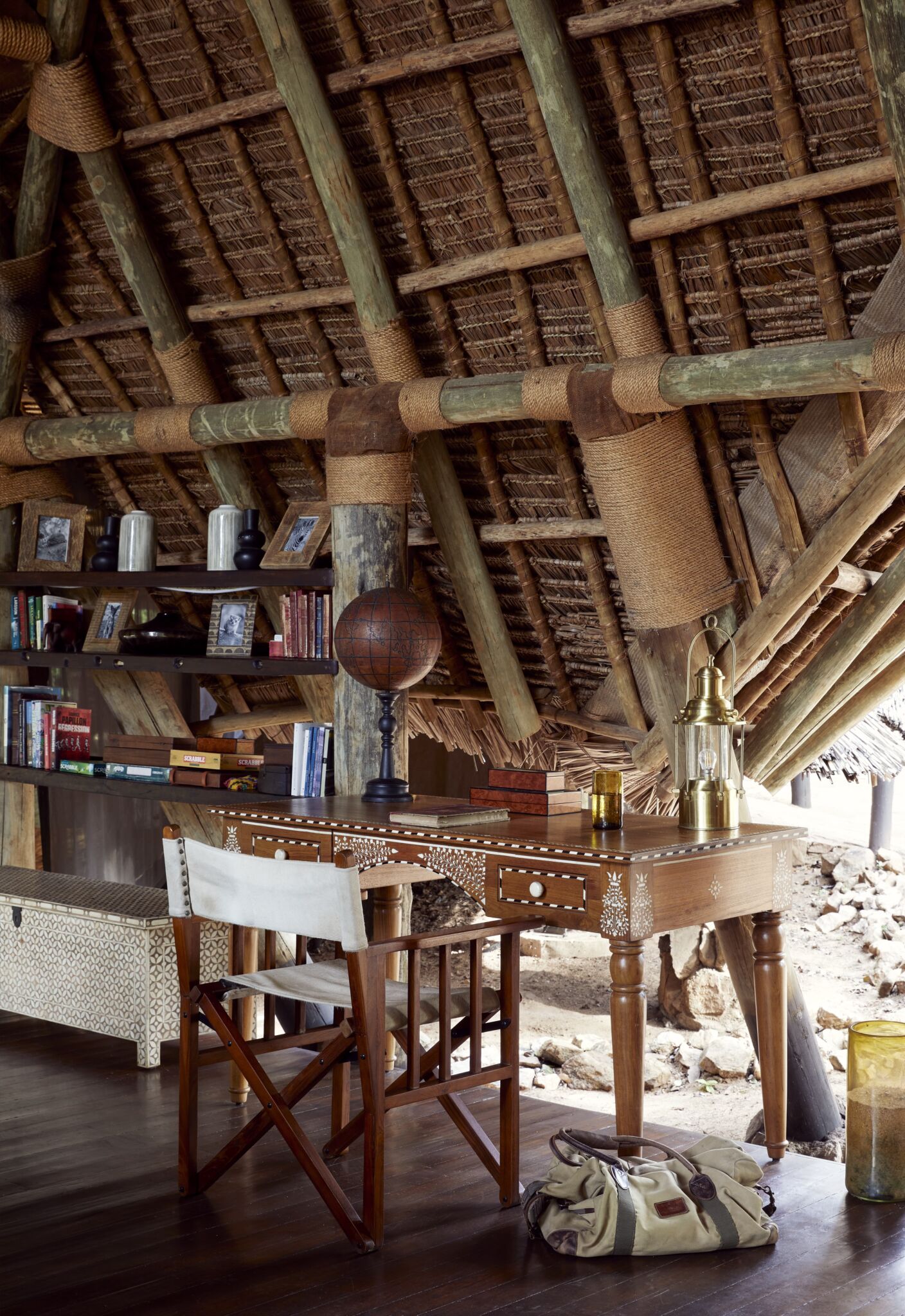
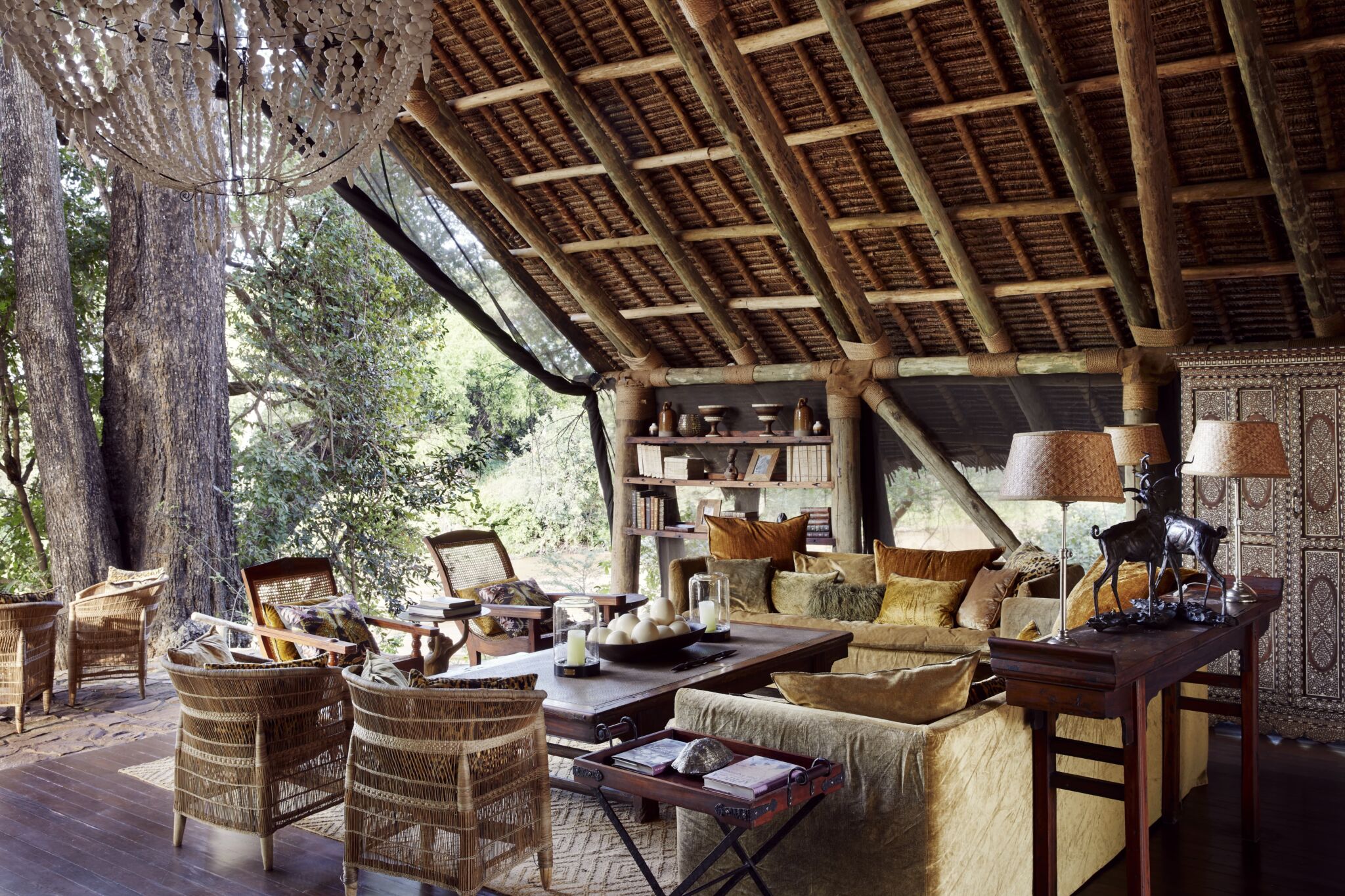
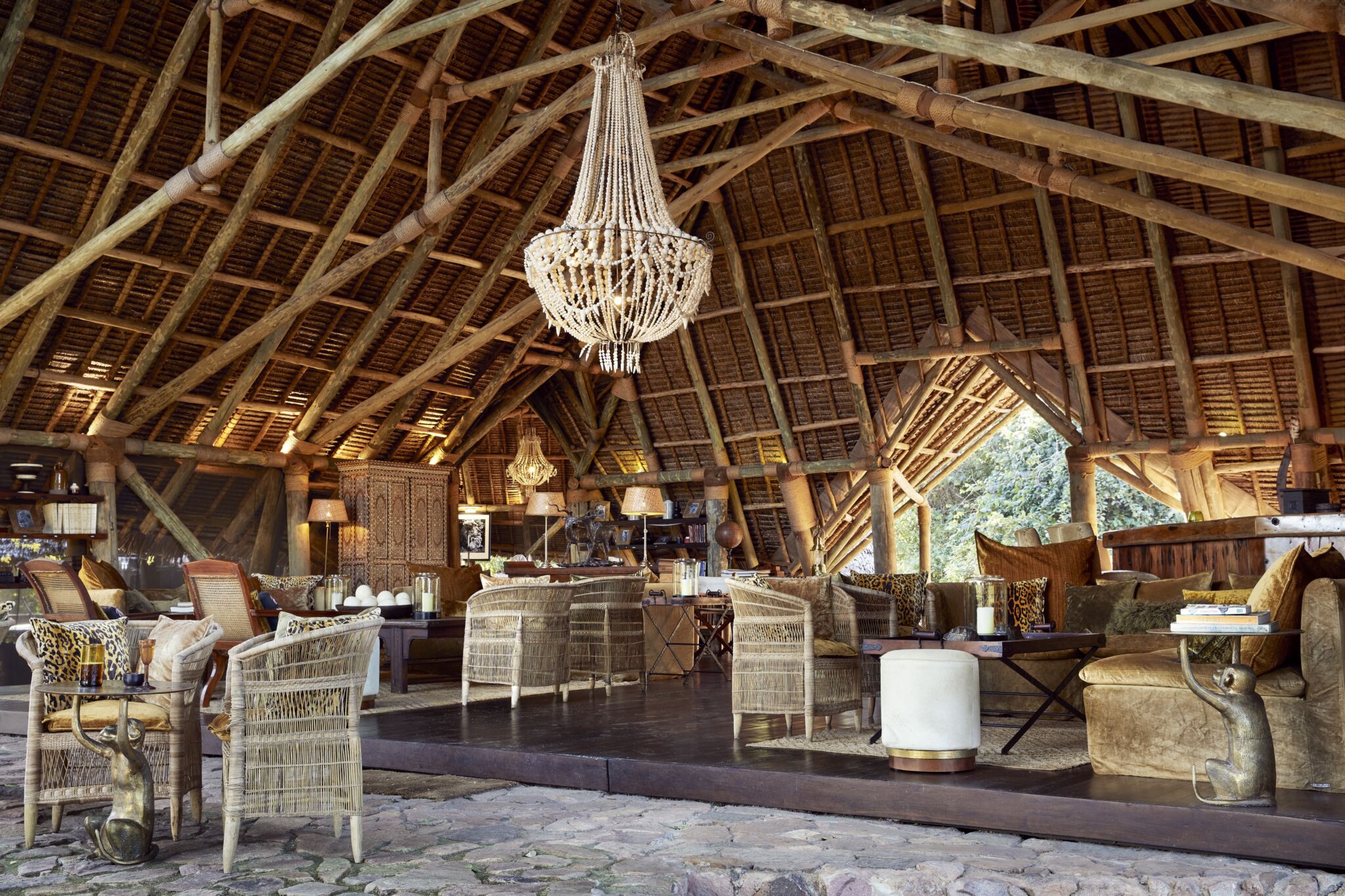
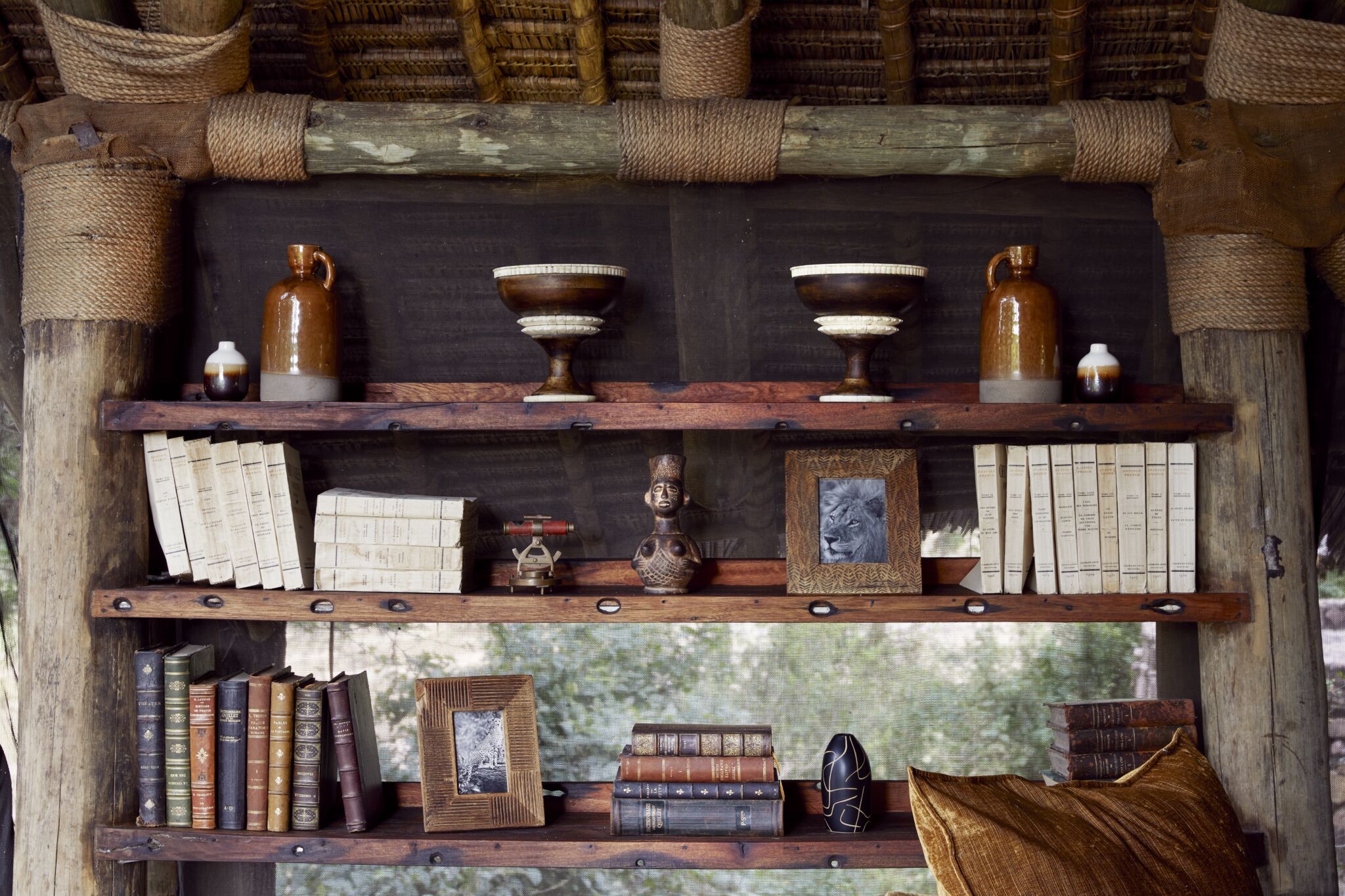
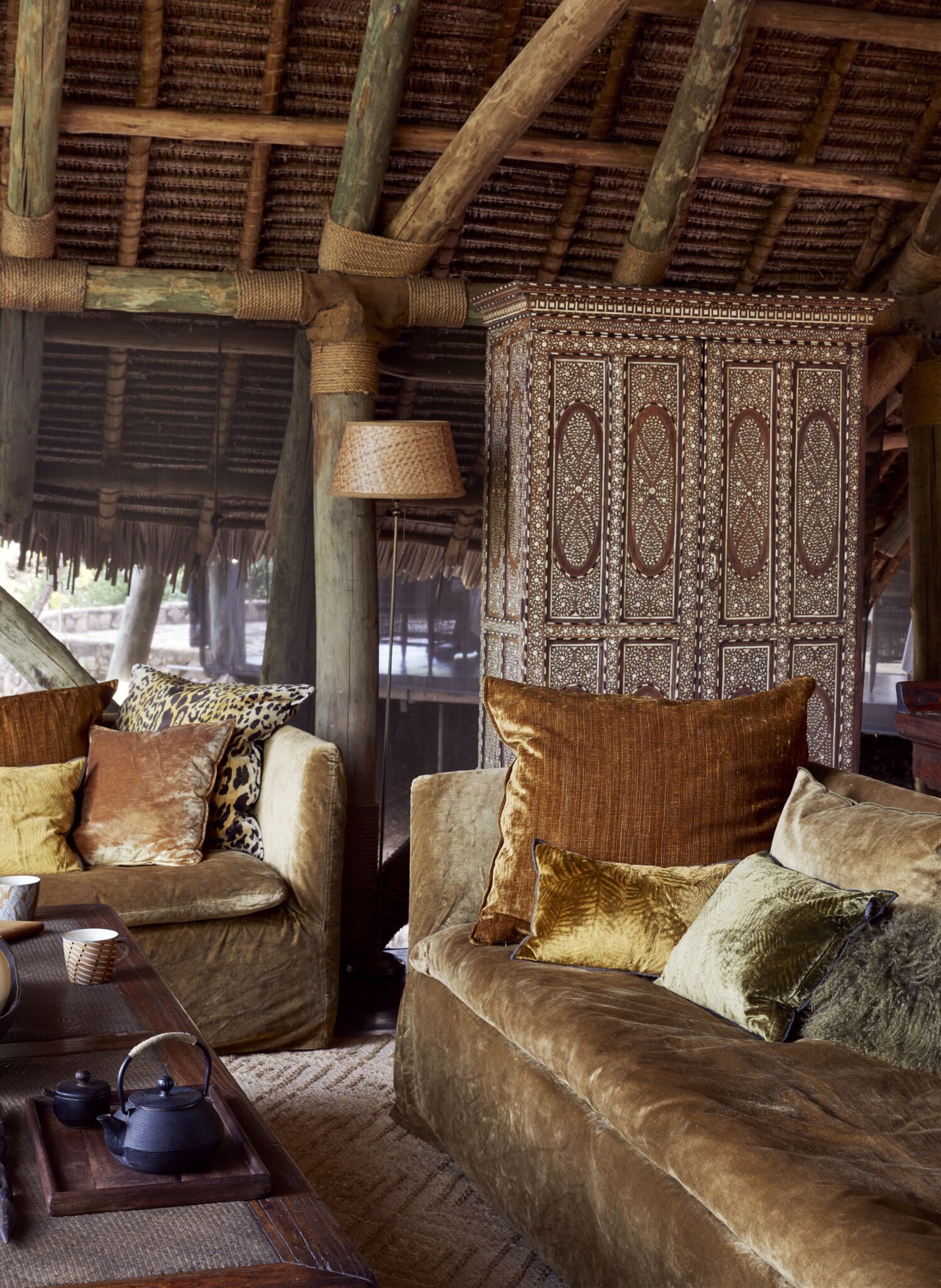
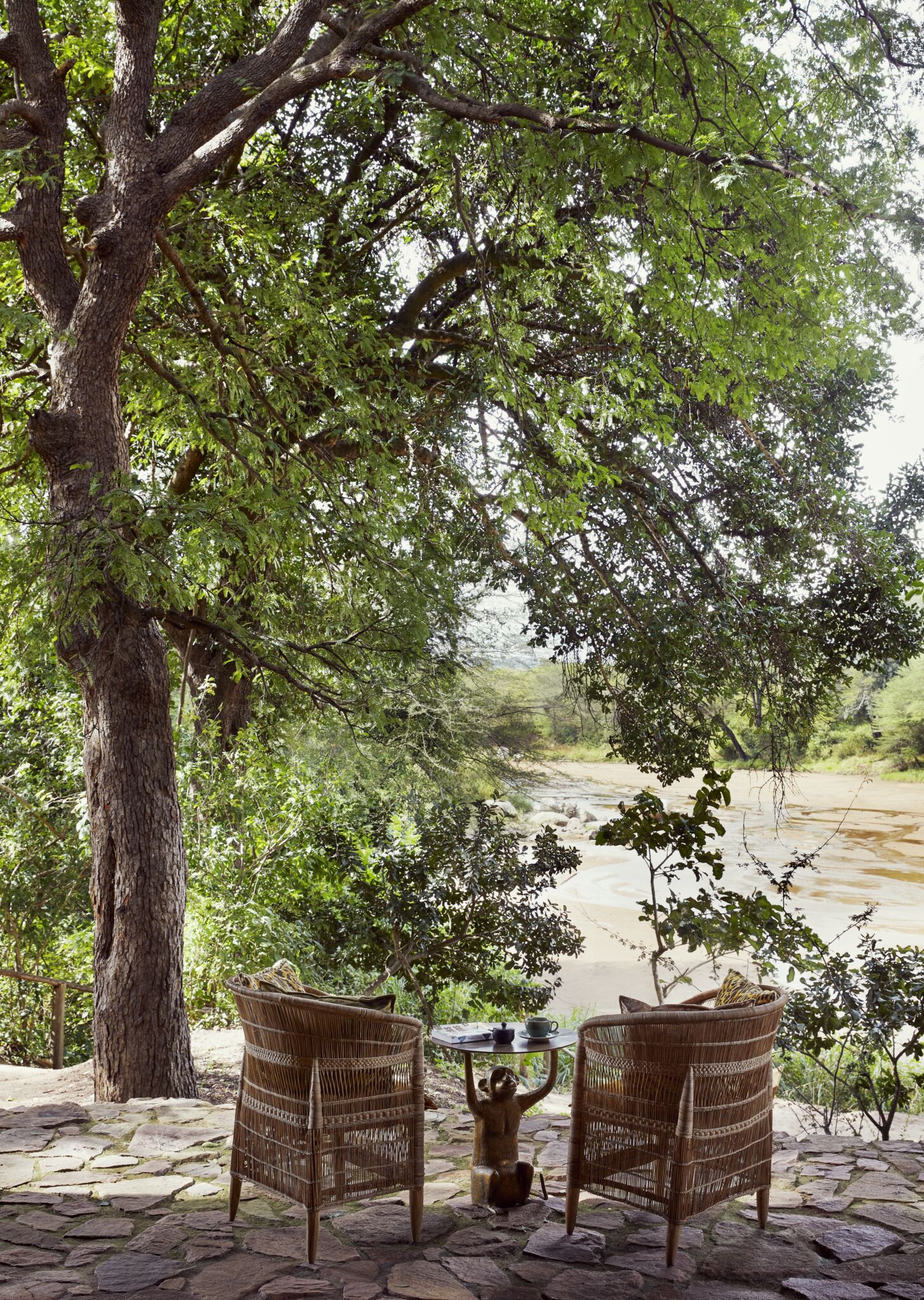
Each tented suite carries a generous living area inside the canvas, with hardwood floors, hand-woven rugs, antique safari-style writing desks and deep reading chairs facing the river. The Bush Manor adds a separate sitting room, dining room and private sundeck. The camp's communal lounge, set under high palm-thatch with views directly onto the river, holds a well-stocked natural-history library, board games and an honesty bar; the dining room opens to the bush on both sides for indoor or al fresco service.
Bedrooms & Laundry
King beds throughout (convertible to twin on request), dressed in organic satin cotton with a small pillow menu. Daily housekeeping with evening turn-down. Complimentary laundry, returned the same day for items left before nine in the morning. Extra child beds available in any of the tented suites, with a minimum age of five years at the camp.
Kitchen & Dining
The suites do not include kitchens; the camp's full-board service covers all meals. The Laba Laba Signature menu draws on contemporary East African cooking, with estate produce from the camp's own gardens and fresh fish brought up from the Great Ruaha. Lunch is taken in the shade of century-old trees on the riverbank or as a private bush picnic in the park. Dinner is served either in the dining room or al fresco by the river, lit by hurricane lamps. Premium wines and spirits are included in the rate; champagne is available at additional charge. Special dietary requirements are accommodated with advance notice.
Bathrooms
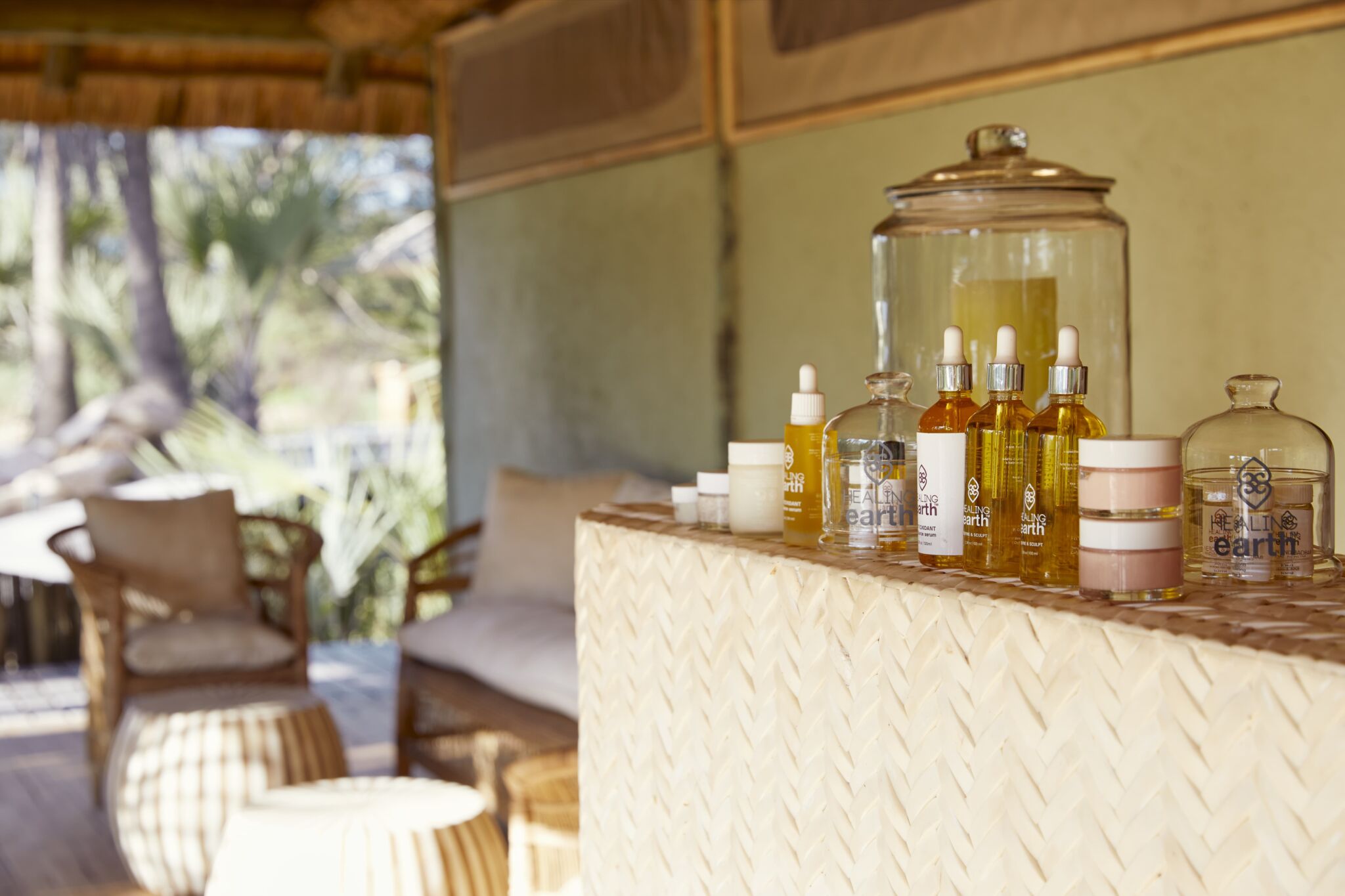
En-suite bathrooms in every tent and the Bush Manor, with large walk-in rain showers, double basins, hairdryers and organic Healing Earth amenities sourced from the same partner that runs the Bush Thermal Spa. Hot water throughout is solar-heated.
Entertainment
The camp does not carry televisions in the tents or the public spaces. The bush is the show. The library holds East African field guides, older safari memoirs, and a small selection of novels. Game drives, walking safaris (seasonal, mid-June to mid-November, from sixteen years of age), night drives and a regular programme of star-watching from the riverbank fill the evenings.
Heating & Cooling
Ceiling fans run in every tent, with the canvas walls and high palm-thatch roofs keeping internal temperatures naturally moderate. Lined rain ponchos and fleece blankets are kept in every game-drive vehicle for the cool early mornings, particularly between June and August. The dry season is sunny and mild; the green season, when the camp reopens at the end of May, is warmer and more humid.
Internet & Office
Wi-Fi via satellite runs in the tents, the Bush Manor and the main areas, sufficient for email and messaging, intermittent by nature. There is no cellular coverage in this part of Ruaha. The camp office holds a satellite telephone for emergency use, with the manager and head guide on call around the clock.
Location Features
The camp sits within Ruaha National Park itself, on the banks of the seasonal Jongomero River. The surrounding country is miombo woodland, baobab plain and sand-river bush, with the highest density of large predators per square kilometre of any park in East Africa. The park is unfenced and the camp is open to wildlife; an armed ranger escorts guests between the tents and the main areas after dark, by standing safari protocol.
Outdoor Spaces
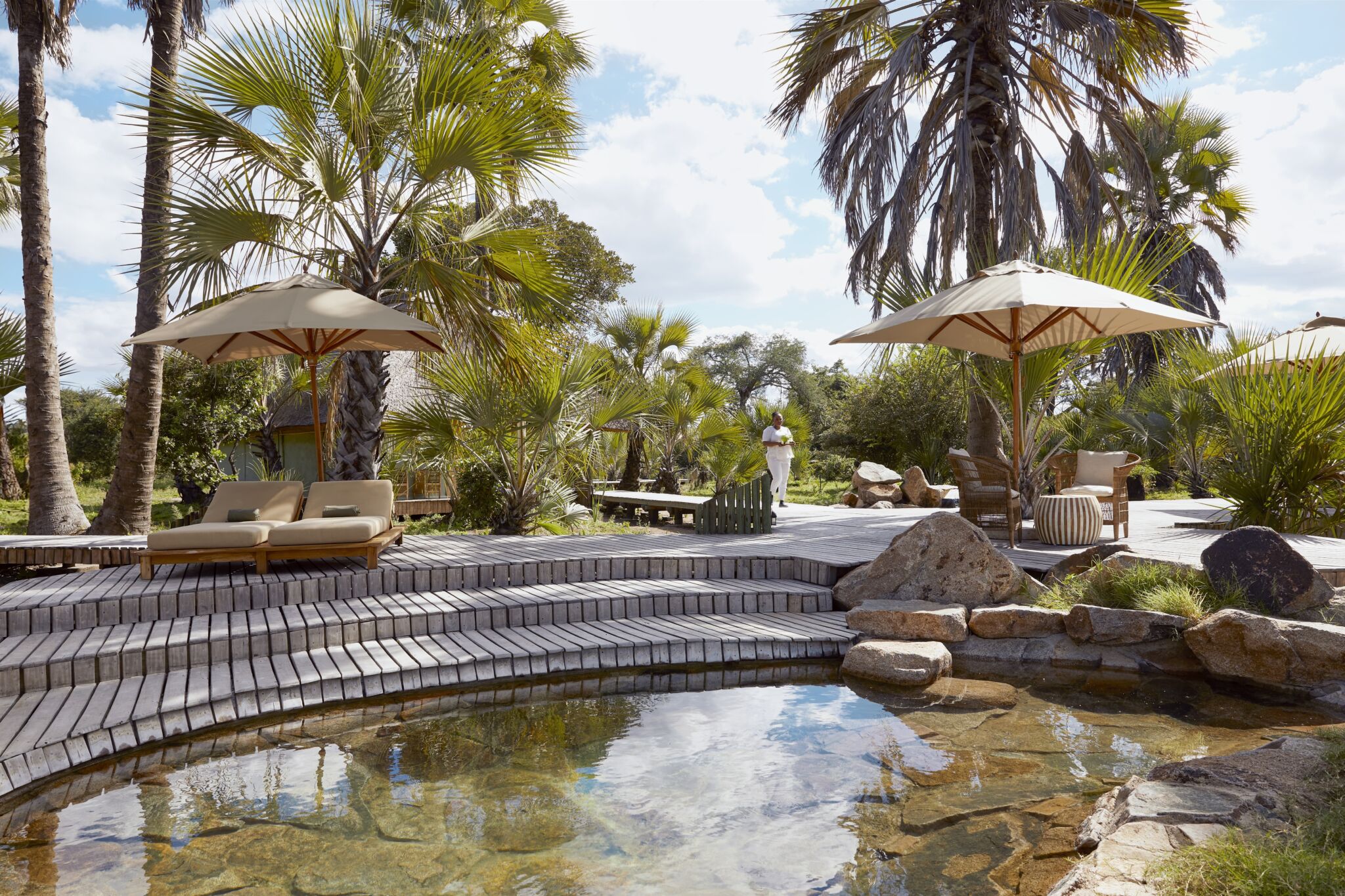
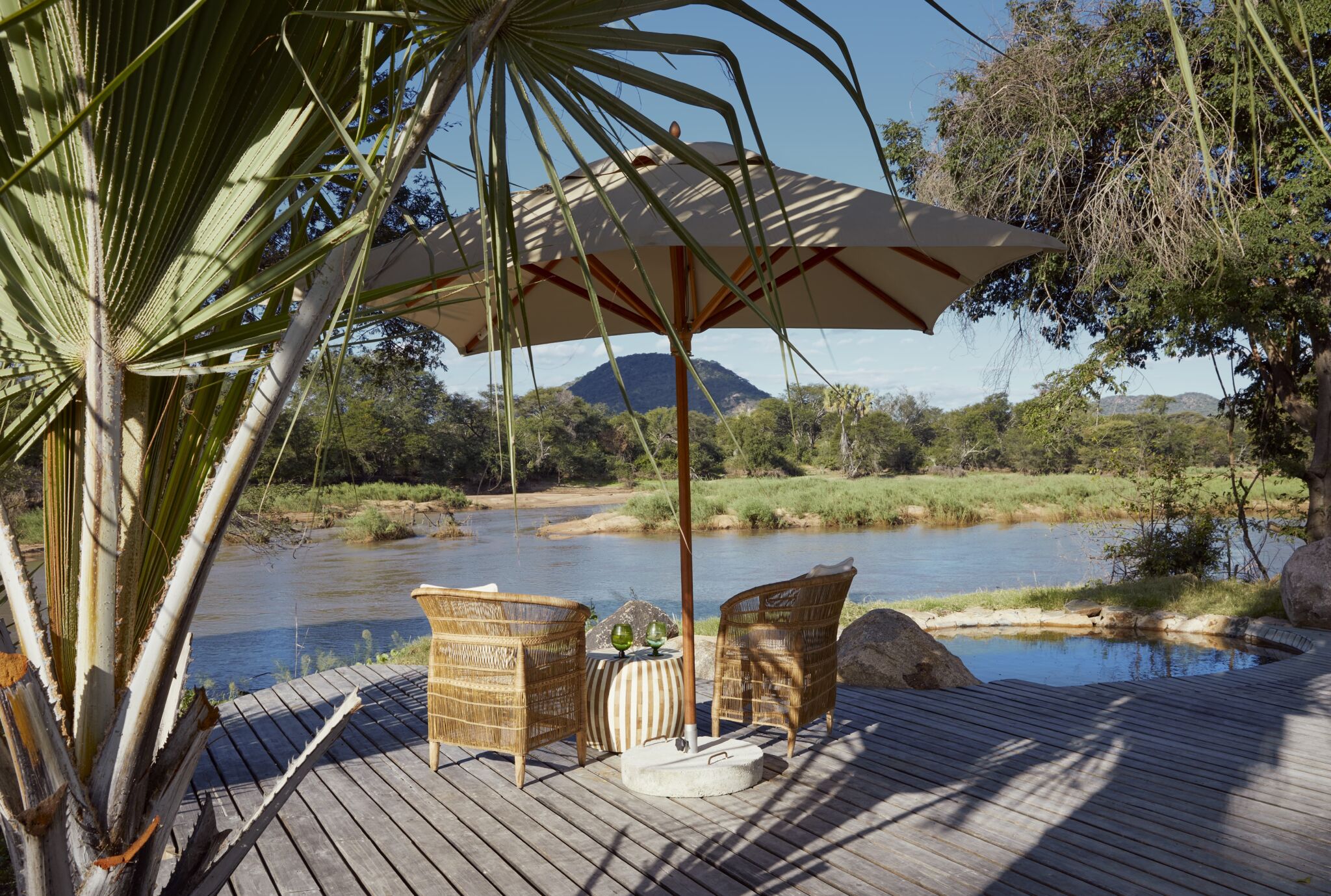
A river-view swimming pool is set on a deck above a quiet bend of the Jongomero, with shaded loungers and a small bar for poolside service. A Technogym pavilion sits adjacent to it. Each tent's private verandah faces the river, with a coffee station for the dawn. The Bush Manor includes its own plunge pool and sundeck.
Parking
The Jongomero Camp is reached exclusively by light aircraft. Return airstrip transfers from Jongomero's own bush strip are included in every booking, in open game-viewing vehicles. There is no road access for guest vehicles. Charters from Dar es Salaam, Arusha, Zanzibar or the southern coast are arranged through your Grand Keys specialist as part of the booking process.
Gallery
Location
Essential Information
Home Policies
Bookings at The Jongomero Camp are taken on a per-tent basis at a fully inclusive nightly rate covering accommodation, all meals, premium wines and spirits (champagne excepted), laundry, twice-daily game drives, return airstrip transfers, all national park conservation fees and government levies. Rates are quoted in US dollars.
Standard stays run to a minimum of three nights, with most guests booking four or five, and seven the natural length for those wanting both the Jongomero country and the optional excursions to little Serengeti, Sables & Roans or the fly camping experience. The Bush Manor carries a minimum of four nights. The camp closes annually between the fifteenth of March and the thirty-first of May for the long rains; bookings outside this window are accepted from June through to mid-March.
A deposit of thirty per cent secures the reservation, with the balance settled ninety days before arrival. Cancellations made more than one hundred and twenty days ahead are refunded in full, less administrative costs. Later cancellations follow a graduated scale, with full forfeiture inside sixty days, given the high cost of holding camp space in a remote operation. Comprehensive travel insurance, including medical evacuation cover (Flying Doctors or equivalent), is required for all bookings and can be arranged through your Grand Keys specialist if not already in place.
The camp accommodates private buyouts for families, milestone celebrations and small corporate retreats by prior arrangement. Service gratuities are not included in the rate and are entirely at the guest's discretion, with separate tipping suggested for the camp staff, the guiding team and the rangers. The published rate carries no booking fee and no payment markup.
Location & Getting Around
The Jongomero Camp sits in the far south-western corner of Ruaha National Park, in Tanzania's Iringa Region, on the banks of the seasonal Jongomero River. The camp's coordinates (7° 54' 41.2" S, 34° 34' 20.1" E) place it approximately eighty kilometres inside the park boundary, in country that sees almost no other tourist traffic.
Access is exclusively by light aircraft. From Dar es Salaam, scheduled and chartered flights run daily via Coastal Aviation and Auric Air, with a flight time of approximately two hours and a connecting stop at Ruaha airstrip before the short hop to Jongomero's own bush strip. From Arusha (the northern gateway and the most common entry point for safaris combining Ruaha with the northern parks), the flight takes approximately three hours via the Selous-Nyerere or direct. From Zanzibar, flights run via Dar with a similar total time of three to four hours including the connection. Private charter is arranged as standard through your Grand Keys specialist as part of the booking.
International access to Tanzania is direct from London (via Kilimanjaro on KLM or Qatar through Doha), from major European hubs via Doha or Addis Ababa, and from southern Africa via Johannesburg. The Tanzanian visa is straightforward and obtainable on arrival or in advance.
On the ground, all movement within the park is by the camp's own open game-viewing Land Cruisers, in the company of a qualified guide and (where required for walking safaris and in some sectors) an armed ranger. Guests do not drive themselves at any point within the park.
House Rules
The Jongomero Camp accommodates children from the age of five. Walking safaris (a serious bush activity requiring sustained attention) are restricted to guests aged sixteen and over, and the hot-air balloon flight to those aged seven and over, subject to physical conditions. Younger families are accommodated, but the camp is by nature a wilderness setting and small children must be accompanied by a parent or guardian at all times.
The camp is unfenced and wildlife passes through. After dark, guests are escorted between the tents and the main areas by an armed ranger, as a matter of standard safari practice. Tent doors and verandah flaps must remain zipped at night. Food and scented products are kept inside the tent at all times. The guiding team will brief every guest on arrival, and the briefing is not optional.
Quiet hours are observed from ten in the evening, when the camp generator cycles down and the bush takes over. The dawn is the noisiest part of the day, when the birds wake and the lions, if you're lucky, call from the far bank. Smoking is permitted only on the tent verandahs and at the outdoor sections of the lounge and bar. Vaping follows the same rule. Pets cannot be accommodated.
Photography for personal use is welcomed throughout the camp and on the game drives. Commercial photography, drone use, and any filming for broadcast or publication requires the camp's prior written consent and the appropriate Tanzanian permits, which the camp can arrange with notice. Drones are otherwise prohibited within the national park by Tanzanian National Parks Authority regulation.
Experiences Nearby
The camp's programme of activities is built around the rhythm of the bush, with the standard daily offer included in the rate and a small number of optional excursions available at additional charge.
Included in the rate. Twice-daily private game drives in the company of a dedicated guide, in open Land Cruisers fitted with cooler boxes, binoculars, fleece blankets and rain ponchos. Morning or afternoon drives may extend to full-day game drives with a bush lunch, at the guest's preference. Seasonal walking safaris run between mid-June and mid-November, from sixteen years of age, with a qualified walking guide and an armed ranger; this activity must be confirmed at the point of booking. Night drives by spotlight are offered through the dry season for nocturnal species (genet, civet, leopard, lion at the hunt). Bathing in the natural hot-spring pools at the Bush Thermal Spa is included, as are drinks, towels and sun beds.
Optional excursions. The most rewarding for a longer stay is the fly camping safari in little Serengeti, a plain in the heart of Ruaha named for one of the park's most iconic landscapes, where a private mobile camp is set up beneath the stars and guests spend the afternoon walking in with an armed guide and a local ranger. Comfortable bedding, crisp white linens and a hot bucket shower in a private location complete the picture. Dinner is prepared on an open fire by a dedicated chef; breakfast in the morning before the walk back to the main camp. A minimum three-night stay at the main camp is required, with the fly camp from sixteen years of age and seasonal availability from mid-July to the end of October.
Day expeditions. A full-day drive into little Serengeti itself, the central plain that attracts the largest herds and the highest predator density during the dry season. A full-day drive to Sables & Roans, a quieter sector of pale sandy soils where the sable and roan antelope (both rare elsewhere in East Africa) live alongside elephant, kudu and the occasional predator on the move between water sources.
Walking expedition along the Ruaha River. A multi-night expedition for the more committed, ending in fly-camping under the stars. Approximately two and a half hours of walking morning and afternoon, between two and a half and three nights in the bush, with a dedicated team of guide, ranger, waiter, Maasai and chef accompanying the party. Maximum six guests, from twelve years of age.
Exploration of all Ruaha. A drive-and-camp expedition through the best spots of the wider park, with game drives in the morning and afternoon, a private chef preparing the day's lunch, and a fully serviced luxury mobile camp set up at a new location each evening. Maximum six guests, from twelve years.
Hot-air balloon safari. A dawn flight over the southern Ruaha landscapes as the wildlife begins to come alive, ending with a champagne breakfast in the bush after the first hunt. Available between mid-June and the end of October, from seven years of age (subject to certain conditions). Pre-booking is required, and the experience is exceptional.
All optional excursions are arranged in advance through your Grand Keys specialist. Government conservation and park fees for the standard included activities are covered by the camp's nightly rate; third-party park fees for optional excursions are noted on the rate sheet at the point of booking and confirmed at the time of reservation.
Bespoke Holiday Planning
Let us create your perfect stay.
We can also create bespoke holiday stays designed entirely around you. Whether you dream of a secluded coastal retreat, a chic city hideaway, or an enchanting countryside escape, every detail is tailored to your tastes and desires. Our dedicated team ensures your getaway is seamless, memorable, and uniquely yours.